
Río Lagartos, Yucatán — March 14, 2026
We left Mérida at 5:30 am, Sandra, Paola and I, in the dark. The night before I had bought three lattes and put them in the fridge — Café Habana is open 24 hours but has no parking, and driving three hours before dawn without coffee was not a negotiation I was willing to lose. Reheated latte is not ideal. It was still better than nothing.
We had booked the Nature Lovers Tour with Río Lagartos Adventures months in advance. We arrived about 45 minutes early — we always plan for worst-case traffic and add padding — and since our guide, Ángel Núñez, was already there and everyone was ready, we set off ahead of schedule.
A Name That Lies Twice
As we pulled away from the pier, Ángel mentioned something that reframes the entire place: Río Lagartos is neither a río(river) nor does it have lagartos (alligators). What flows here is not a river but a ría, a coastal estuary fed primarily by ocean water diluted by freshwater from local cenotes. And the crocodilians present are crocodiles — two species of them — not alligators. The name has been misleading visitors for centuries, and the reality it obscures is far more interesting than the label.
The Ría
The Ría Lagartos Biosphere Reserve is a UNESCO-recognized estuary on the north coast of the Yucatán Peninsula, covering over 60,000 hectares of mangrove, coastal lagoon, and wetland habitat. The water we were moving through is brackish — a mix of Gulf saltwater and the freshwater that percolates up from the cenote system beneath the peninsula. That chemical balance, constantly negotiated between salt and fresh, is what makes the mangrove ecosystem function and what makes it so productive for wildlife.
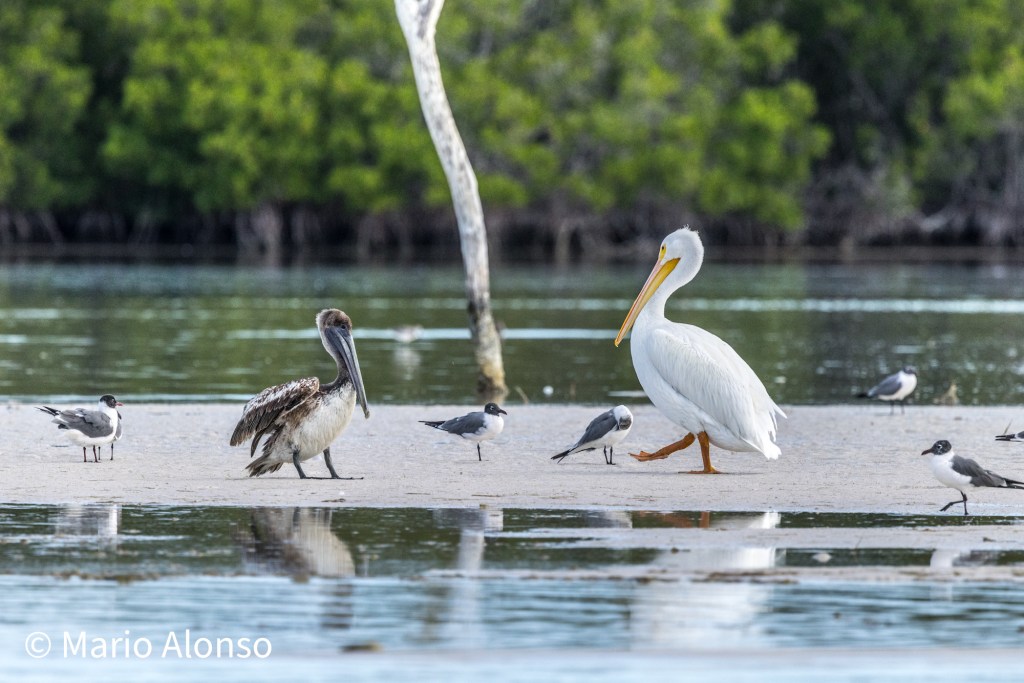
We saw the productivity almost immediately. Ángel stopped the boat in front of a small sandbar barely above the waterline, where a mixed group of Laughing Gulls (Leucophaeus atricilla) and Brown Pelicans (Pelecanus occidentalis) were resting alongside a single American White Pelican (Pelecanus erythrorhynchos). I had seen both pelican species before, but never side by side. The size difference is genuinely shocking. Brown Pelicans are substantial birds — seeing them next to the White Pelican, they looked almost small. The White Pelican is one of the largest birds in North America by wingspan, and the photograph does not exaggerate what the eye sees.
The Birds of the Ría
What followed over the next several hours was one of the richest single wildlife experiences of the trip. Ángel worked the ría methodically heading east, stopping at shallow areas where birds were concentrated and letting us photograph without rushing.
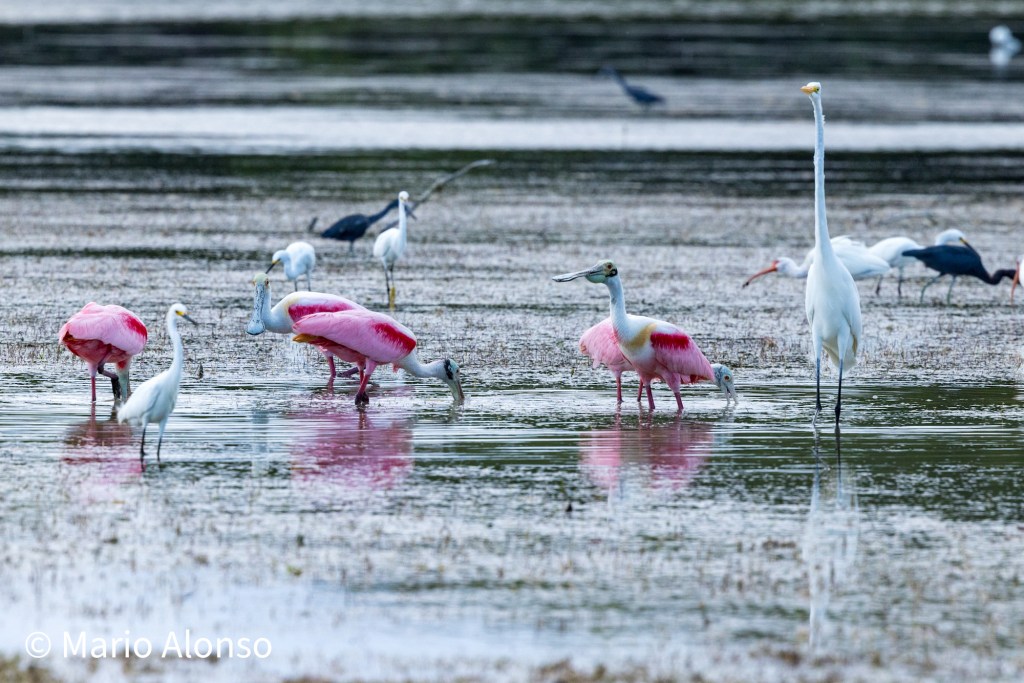
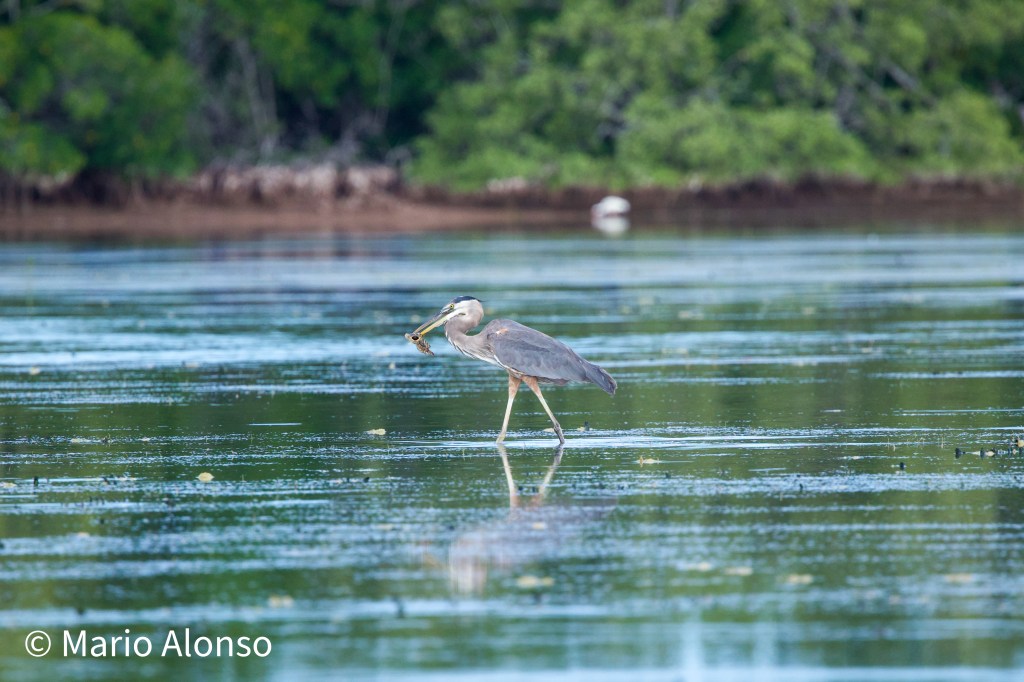
The shorebird and wading bird diversity was extraordinary. Great Egrets (Ardea alba), Tricolored Herons (Egretta tricolor), Great Blue Herons (Ardea herodias), Little Blue Herons (Egretta caerulea), and Green Herons (Butorides virescens) were present throughout. Magnificent Frigatebirds (Fregata magnificens) patrolled overhead, their forked tails and angular wings unmistakable against the sky. The Little Blue Heron observation was personally satisfying — I had previously only seen juveniles, which are entirely white and easily confused with other species. Seeing adults alongside their white juvenile counterparts made the plumage transition suddenly make sense in a way that field guides had never quite managed.
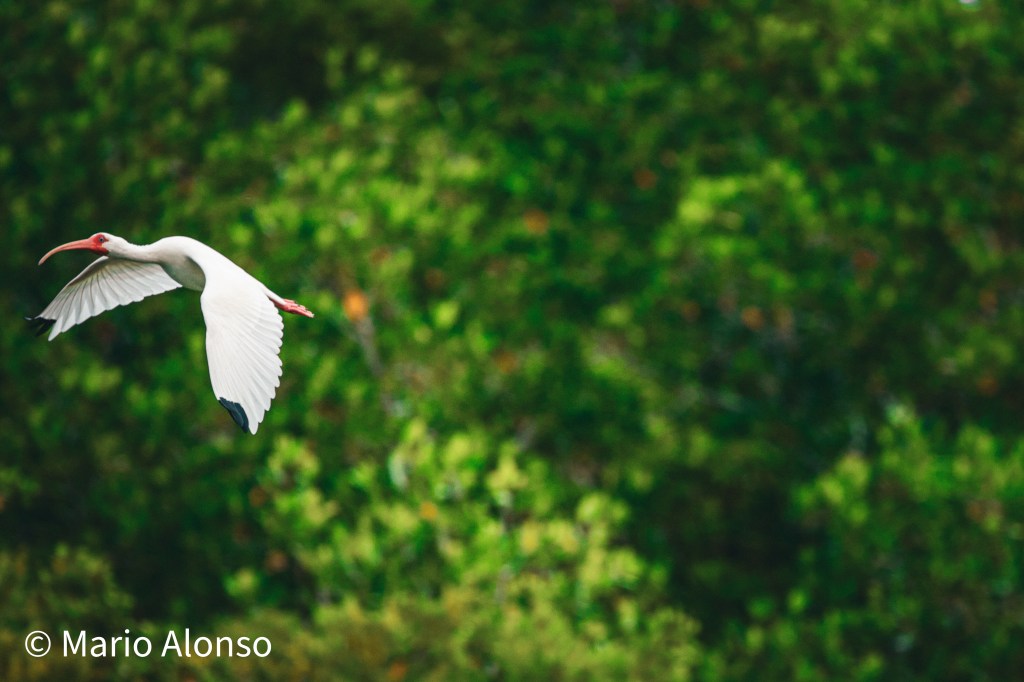
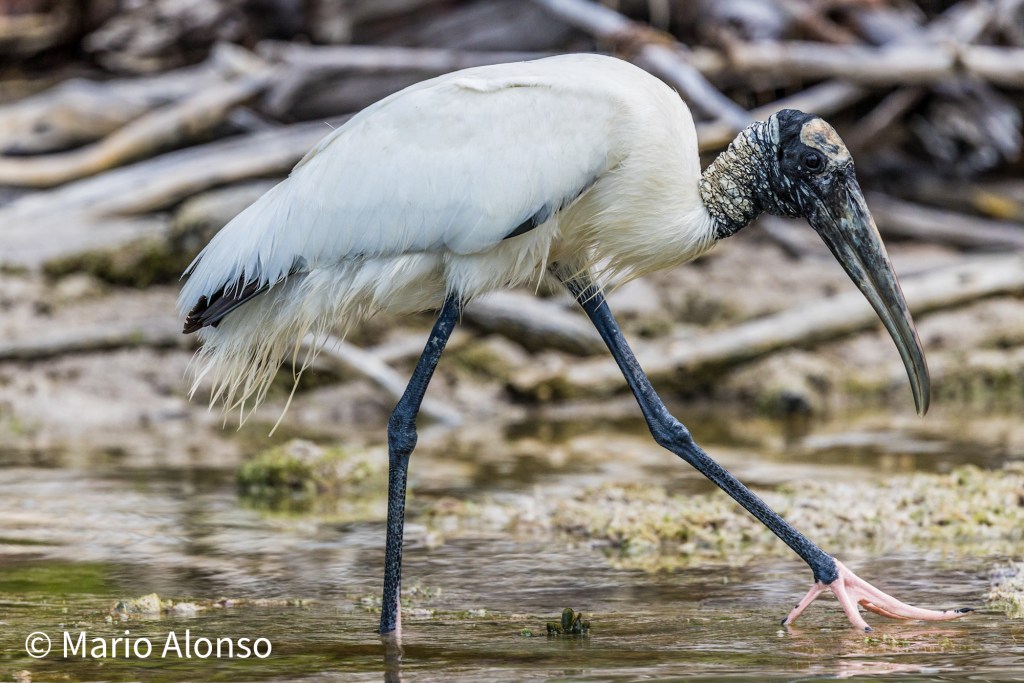
Anhingas (Anhinga anhinga) — known locally as pájaro serpiente, the snake bird, for the way they extend their sinuous neck above the water — appeared regularly along the mangrove edge. American White Ibis (Eudocimus albus) fed in the shallows and flew overhead, the orange-red decurved bill unmistakable in flight. In one of the mixed feeding flocks we spotted a Wood Stork (Mycteria americana), its dark featherless head and heavy bill marking it clearly among the white egrets and spoonbills around it.
Great Egret
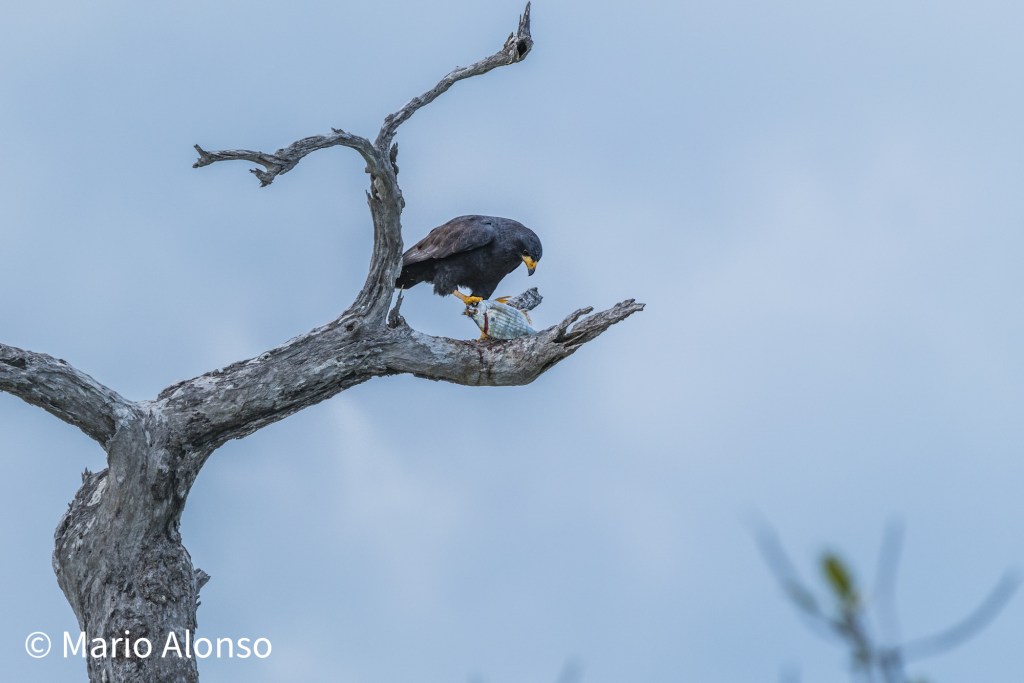
The moment that made me wish I had faster reflexes: a Common Black Hawk (Buteogallus anthracinus) dropped from a perch, hit the water, and pulled out a substantial fish in a single fluid motion before I could raise the camera. What I did get was the aftermath — the hawk settled on a dead snag with its catch, leaned over it with that focused intensity raptors bring to a meal, and stayed still long enough to photograph properly.
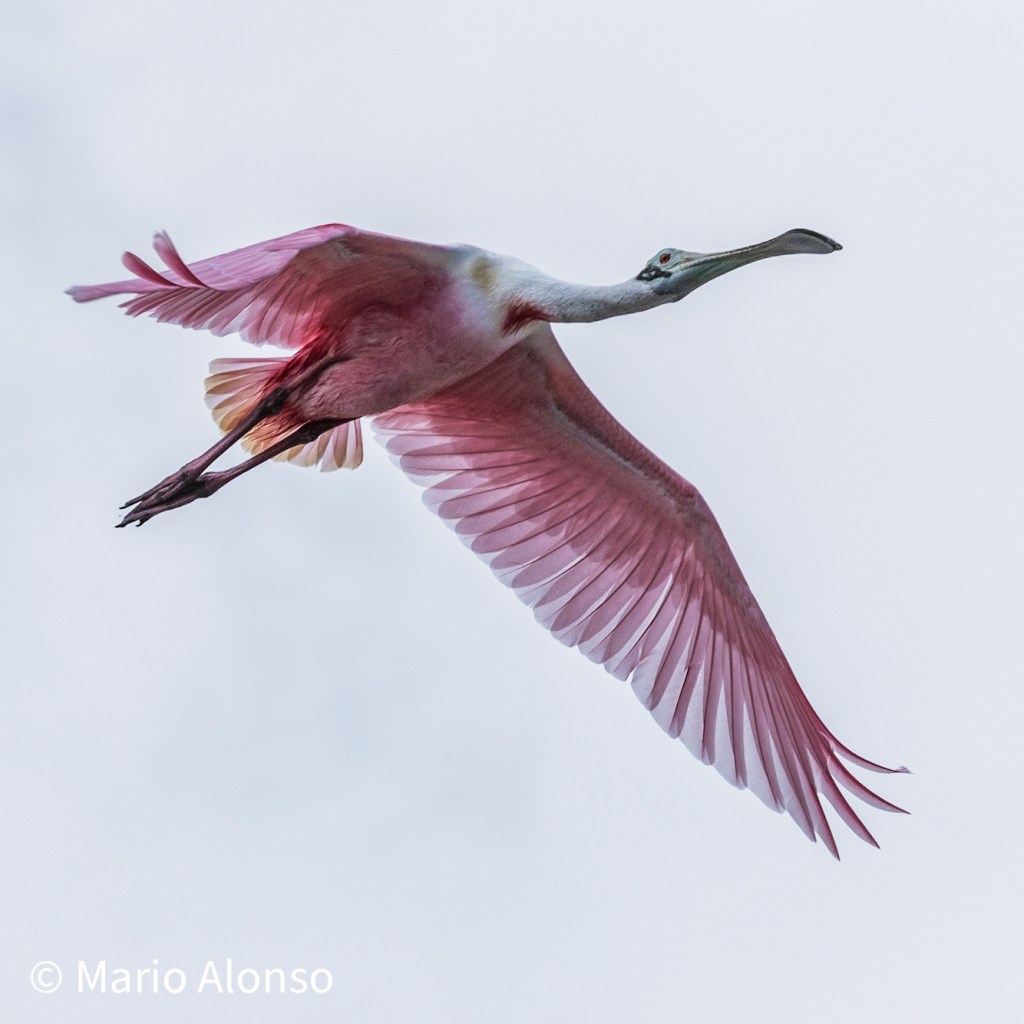
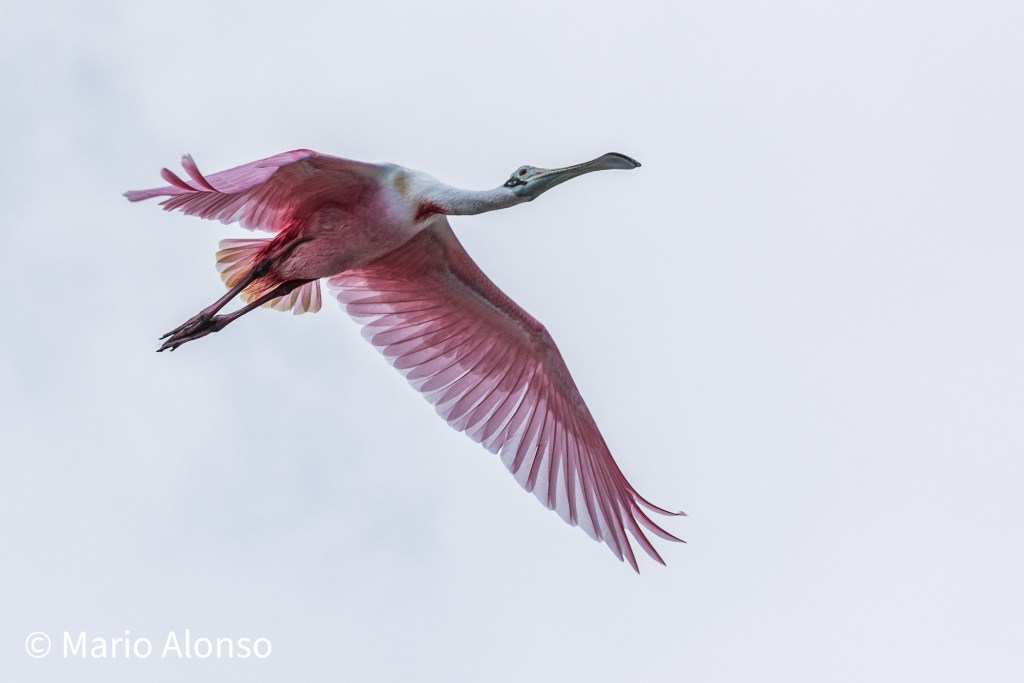
The Roseate Spoonbills (Platalea ajaja) deserve their own paragraph. Ángel pointed to a group of distant pink birds and asked us what we thought they were. Flamingos, we said. He smiled and said nothing, letting us figure it out as we drew closer and the spatulate bills came into focus. A group flew directly overhead shortly after and I tracked them as they passed — the pink plumage backlit against a white overcast sky, the unmistakable bill clearly visible, feet trailing behind. That flight shot is one of the images I am most satisfied with from the entire trip.
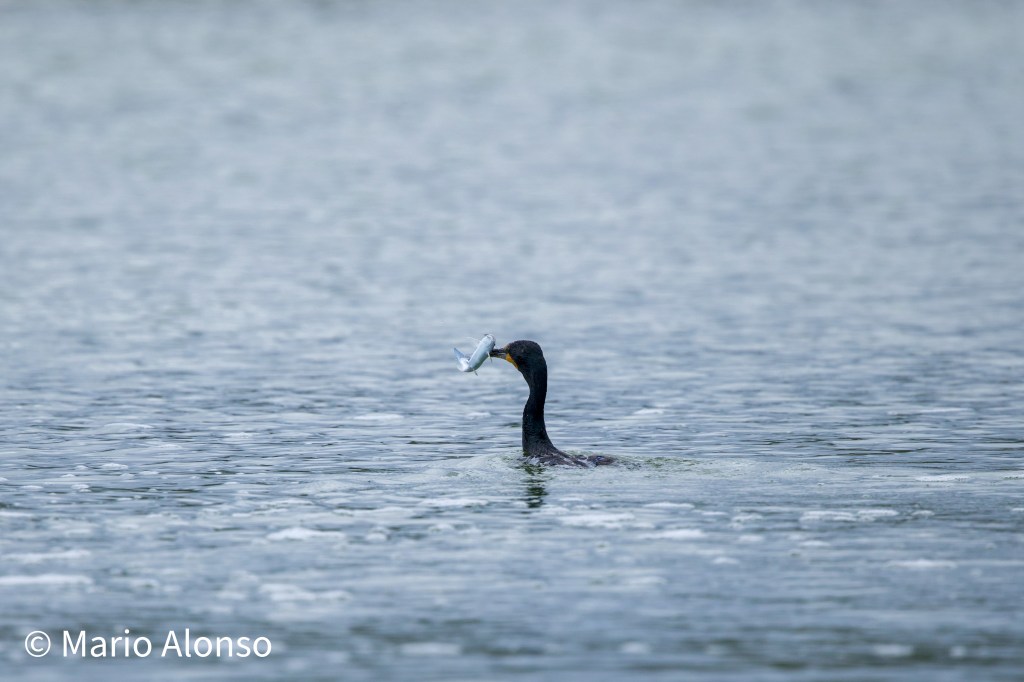
A Neotropic Cormorant (Nannopterum brasilianum) surfaced directly in front of us with a fish already in the process of being swallowed, head tilted back, the silver flash of the catch still visible before it disappeared. Three separate birds with freshly caught fish in the same morning — the ría was demonstrably feeding everything in it.
The Cenote on the Bank
Ángel pulled the boat to the bank at one point and we disembarked to walk into a clearing with taller vegetation surrounding a pool of strikingly clear freshwater. At the center, a visible upwelling marked the ojo de agua — a spring fed directly by the cenote system below. The water was crystalline against the turbid estuary we had been traveling through, the difference between the two environments visible within a few meters of each other.
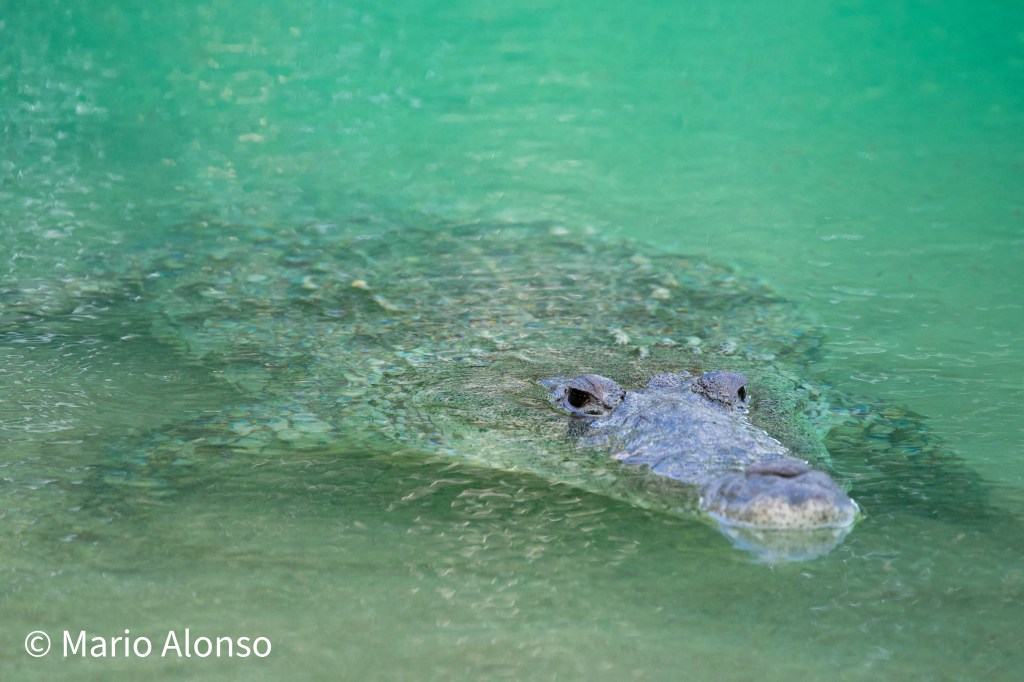
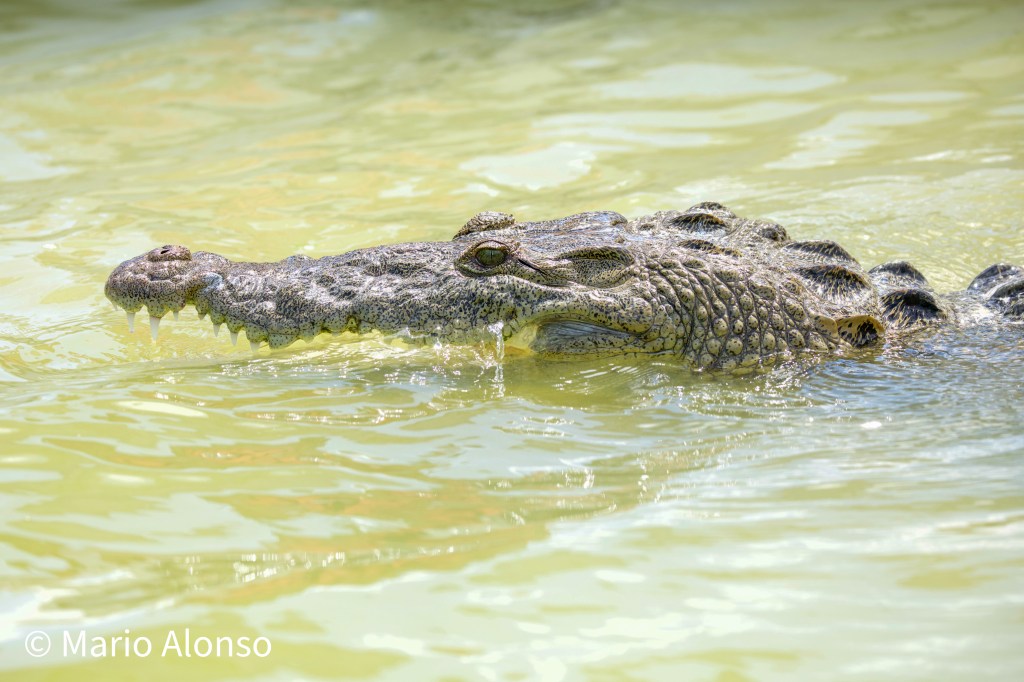
The pool had a resident: a Morelet’s Crocodile (Crocodylus moreletii), the freshwater species, drifting with complete composure in the spring water. The broad, rounded snout characteristic of this species was clearly visible. Morelet’s occupies freshwater habitats throughout the Yucatán and is the species you are likely to encounter in cenotes and inland wetlands, while the American Crocodile (Crocodylus acutus) — with its longer, more tapered snout — predominates in the brackish waters of the ría itself. Seeing both species on the same morning, in their respective preferred habitats separated by only a short walk, was one of those field biology moments that textbooks describe but experience makes real.
The Net and What It Means
Before passing under a bridge along the western stretch of the ría, we passed a small fishing boat. One fisherman sat at the motor while another stood at the bow and threw a cast net in a single practiced arc — the mesh opening fully in the air, water droplets catching the light, before dropping onto the surface. Within a minute they were pulling it back in, heavy with fish.
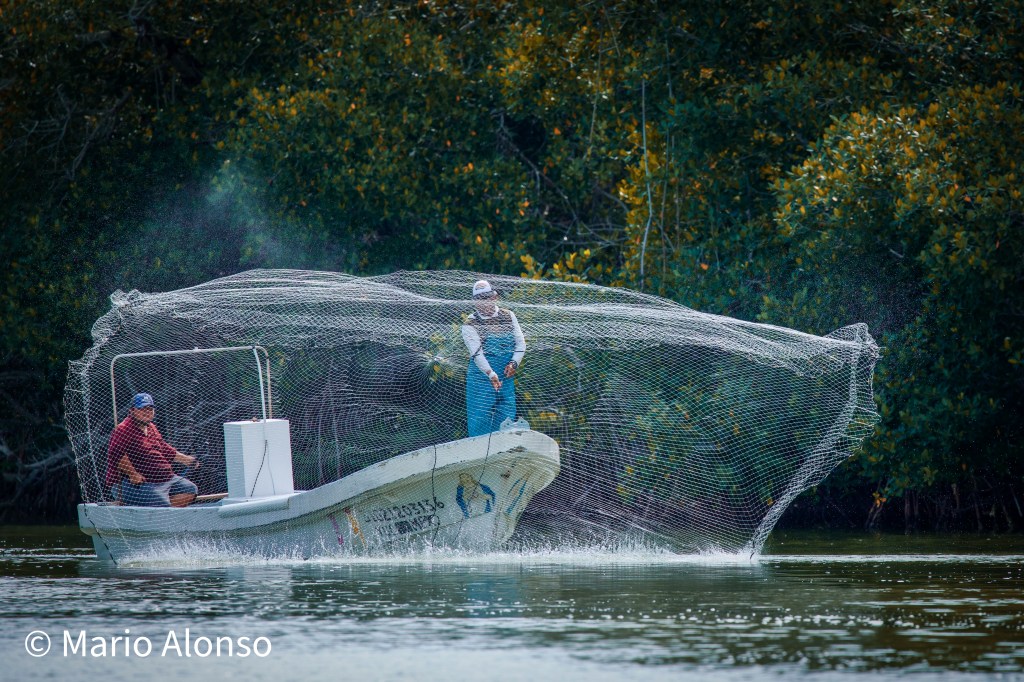
It is an image worth sitting with. The ría feeds an entire community — not just the herons and spoonbills and cormorants we had been photographing all morning, but the families of Río Lagartos who have been working these waters for generations. The abundance we were witnessing from a nature tour boat is the same abundance that sustains local livelihoods. The ecosystem and the community are not separate things here.
A Shadow on the Water
As we continued west, the mangrove changed. The transition was gradual at first, then unmistakable: dead trees, sparse vegetation, large gaps in the canopy where there should have been continuous green. Ángel pointed it out without prompting. The official explanation, he said, was rain damage. He did not find this credible.
Seeking more information after the tour, I found that the documented cause is chronic hydrological disruption rather than a single event. The salt operation at Las Coloradas — Industria Salinera de Yucatán S.A. de C.V. (ISYSA), Mexico’s second-largest sea salt producer — holds a federal concession of approximately 5,000 hectares within the reserve. Its chain of evaporation and crystallizer ponds draws water from the estuary on an industrial scale, altering the freshwater-saltwater balance that mangroves require to survive. Biologist Julián Rojas has documented dead mangrove in areas directly adjacent to the salt infrastructure, and local fishermen have reported historical toxic discharges affecting fish and other species in the ría. The die-off pattern is spatially concentrated around salinera infrastructure, not randomly distributed — which makes rainfall a convenient but unconvincing explanation. Local residents have also raised concerns about regulatory capture, noting that the reserve’s director previously worked for the salt industry.
We had decided before the tour not to visit Las Coloradas. We understand that all industrial activity carries environmental cost. What we are not willing to accept is that cost being externalized onto a UNESCO biosphere reserve with inadequate oversight. The way to register that position, however modestly, is to keep our spending in the local community.
The Flamingos
The mangrove recovered its health as we continued, and eventually Ángel brought us ashore at a beach on the eastern section of the reserve. He suggested we go barefoot — the thick mud would claim any shoe that entered it. There were Horseshoe Crabs (Limulus polyphemus) at the water’s edge, requiring careful navigation, and the ground transitioned from soft mud to a surface that felt like walking on damp powder.
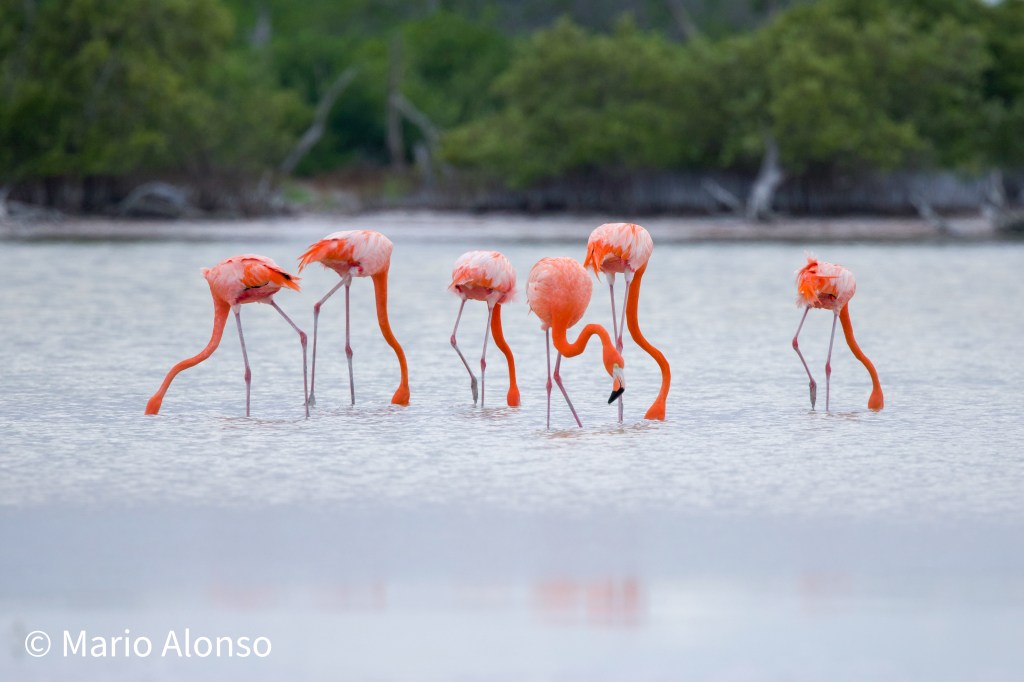
We made our way around a small lagoon toward a larger one, and found approximately twenty American Flamingos(Phoenicopterus ruber) feeding in the shallows. The water around them carried a faint pink tinge from the algae and brine organisms that form the base of their diet. A dense mangrove wall framed the far edge of the lagoon. The birds were feeding with heads fully submerged, the filter-feeding posture that makes the upside-down bill anatomy suddenly make sense. Unlike the large roosting flocks at Sisal, this felt intimate — a small working group of birds in a quiet corner of the reserve, apparently indifferent to three humans standing at the water’s edge.
Full Circle
The rain caught us on the return journey and we decided to head straight back to the pier rather than stop further. It had been a full morning.
Ángel recommended lunch at El Perico Marinero in the village, and we followed his advice. We started with tostadas de pulpo, then moved on to fish soup and pescado al ajillo. Everything was excellent. Eating in the village, in a place recommended by the guide who had just spent the morning explaining why the health of this ecosystem matters, felt like the right way to end the day. The ría feeds the birds, the birds feed the experience, the experience should feed the community. That chain only works if the ecosystem stays balanced… Support it accordingly.
📷 View the full Río Lagartos photo gallery
All photographs: Canon R5 Mark II with RF 100–500mm f/4.5–7.1L IS USM. Ría Lagartos Biosphere Reserve, Yucatán, Mexico. March 14, 2026. Tour: Río Lagartos Adventures, guide Ángel Núñez.
Versión en Español
Río Lagartos, Yucatán — 14 de marzo de 2026
Salimos de Mérida a las 5:30 am, Sandra, Paola y yo, en la oscuridad. La noche anterior había comprado tres lattes y los había puesto en el refrigerador — Café Habana abre las 24 horas pero no tiene estacionamiento, y manejar tres horas antes del amanecer sin café no era una negociación que estuviera dispuesto a perder. El latte recalentado no es ideal. Seguía siendo mejor que nada.
Habíamos reservado el Nature Lovers Tour con Río Lagartos Adventures con meses de anticipación. Llegamos unos 45 minutos antes — siempre planificamos para el peor escenario de tráfico y añadimos margen — y como nuestro guía, Ángel Núñez, ya estaba ahí y todos estaban listos, salimos antes de lo programado.
Un Nombre que Miente Dos Veces
Al alejarnos del muelle, Ángel mencionó algo que replantea el lugar por completo: Río Lagartos no es ni un río ni tiene lagartos. Lo que fluye aquí no es un río sino una ría, un estuario costero alimentado principalmente por agua del océano diluida con agua dulce de los cenotes locales. Y los cocodrilianos presentes son cocodrilos — dos especies de ellos — no lagartos. El nombre ha estado confundiendo a los visitantes durante siglos, y la realidad que encubre es mucho más interesante que la etiqueta.
La Ría
La Reserva de la Biosfera Ría Lagartos es un estuario reconocido por la UNESCO en la costa norte de la Península de Yucatán, que abarca más de 60,000 hectáreas de manglar, laguna costera y humedales. El agua por la que navegábamos es salobre — una mezcla de agua salada del Golfo y el agua dulce que sube desde el sistema de cenotes bajo la península. Ese equilibrio químico, constantemente negociado entre sal y agua dulce, es lo que hace funcionar el ecosistema de manglar y lo que lo hace tan productivo para la vida silvestre.
Vimos esa productividad casi de inmediato. Ángel detuvo la embarcación frente a un pequeño banco de arena apenas sobre el nivel del agua, donde un grupo mixto de Gaviotas Reidoras (Leucophaeus atricilla) y Pelícanos Cafés(Pelecanus occidentalis) descansaba junto a un solo Pelícano Blanco Americano (Pelecanus erythrorhynchos). Había visto ambas especies antes, pero nunca lado a lado. La diferencia de tamaño es genuinamente impactante. Los Pelícanos Cafés son aves considerables — verlos junto al Pelícano Blanco, parecían casi pequeños. El Pelícano Blanco es una de las aves más grandes de Norteamérica en envergadura, y la fotografía no exagera lo que el ojo ve.
Las Aves de la Ría
Lo que siguió durante las próximas horas fue una de las experiencias de vida silvestre más ricas del viaje. Ángel recorrió la ría metódicamente rumbo al este, deteniéndose en zonas poco profundas donde las aves estaban concentradas y dejándonos fotografiar sin prisa.
La diversidad de aves playeras y zancudas era extraordinaria. Garzas Blancas (Ardea alba), Garzas Tricolor (Egretta tricolor), Garzas Morenas (Ardea herodias), Garzas Azules (Egretta caerulea) y Garzas Verdes (Butorides virescens) estuvieron presentes a lo largo del recorrido. Fragatas Magníficas (Fregata magnificens) patrullaban en las alturas, sus colas bifurcadas y alas angulares inconfundibles contra el cielo. La observación de la Garza Azul fue personalmente satisfactoria — anteriormente solo había visto juveniles, que son completamente blancos y se confunden fácilmente con otras especies. Ver adultos junto a sus contrapartes juveniles blancas hizo que la transición de plumaje de repente tuviera sentido de una manera que los libros de campo nunca habían logrado.
Great Egret
Anhingas (Anhinga anhinga) — conocidas localmente como pájaro serpiente, por la forma en que extienden su sinuoso cuello sobre el agua — aparecieron regularmente a lo largo del borde del manglar. Ibises Blancos (Eudocimus albus) se alimentaban en las aguas poco profundas y volaban por encima, el pico curvo naranja-rojizo inconfundible en vuelo. En uno de los grupos mixtos de alimentación avistamos una Cigüeña Americana (Mycteria americana), su cabeza oscura sin plumas y su pesado pico marcándola claramente entre las garzas blancas y espátulas que la rodeaban.
[INSERTAR FOTO: Grupo mixto de alimentación con Espátulas Rosadas, garzas, Cigüeña Americana] [INSERTAR FOTO: Ibis Blanco en vuelo] [INSERTAR FOTO: Cigüeña Americana forrajeando]
El momento que me hizo desear tener reflejos más rápidos: un Aguililla Negra Mayor (Buteogallus anthracinus) se lanzó desde su percha, golpeó el agua y sacó un pez considerable en un solo movimiento fluido antes de que yo pudiera levantar la cámara. Lo que sí logré capturar fue la escena posterior — el aguililla se posó en un tronco muerto con su presa, se inclinó sobre ella con esa intensidad concentrada que los rapaces aportan a su comida, y se quedó quieto el tiempo suficiente para fotografiarlo.
Las Espátulas Rosadas (Platalea ajaja) merecen su propio párrafo. Ángel señaló un grupo de aves rosas a lo lejos y nos preguntó qué creíamos que eran. Flamencos, dijimos. Él sonrió y no dijo nada, dejándonos descubrirlo a medida que nos acercábamos y los picos espatulados quedaban en evidencia. Poco después un grupo voló directamente sobre nosotros y los seguí con la cámara — el plumaje rosa contraluz contra un cielo blanco nublado, el inconfundible pico claramente visible, las patas colgando detrás. Esa foto en vuelo es una de las imágenes con las que más satisfecho quedé de todo el viaje.
Un Cormorán Neotropical (Nannopterum brasilianum) emergió justo frente a nosotros con un pez ya en proceso de ser tragado, la cabeza hacia atrás, el destello plateado de la presa todavía visible antes de desaparecer. Tres aves distintas con pescado recién capturado en una sola mañana — la ría demostrablemente alimenta todo lo que hay en ella.
El Cenote en la Orilla
En un momento, Ángel llevó la embarcación a la orilla y desembarcamos para caminar hacia un claro con vegetación más alta rodeando una poza de agua dulce de una claridad sorprendente. En el centro, un afloramiento visible marcaba el ojo de agua — un manantial alimentado directamente por el sistema de cenotes bajo tierra. El agua era cristalina comparada con el estuario turbio por el que habíamos estado viajando, la diferencia entre los dos ambientes visible a pocos metros de distancia.
La poza tenía un habitante: un Cocodrilo de Morelet (Crocodylus moreletii), la especie de agua dulce, derivando con total calma en el agua del manantial. El hocico ancho y redondeado característico de esta especie era claramente visible. El Cocodrilo de Morelet ocupa hábitats de agua dulce en todo Yucatán y es la especie que es probable encontrar en cenotes y humedales interiores, mientras que el Cocodrilo Americano (Crocodylus acutus) — con su hocico más largo y afilado — predomina en las aguas salobres de la ría. Ver ambas especies en la misma mañana, en sus respectivos hábitats preferidos separados por apenas un breve paseo, fue uno de esos momentos de biología de campo que los libros de texto describen pero la experiencia hace real.
La Red y Lo Que Significa
Antes de pasar bajo un puente en el tramo occidental de la ría, pasamos junto a una pequeña embarcación pesquera. Un pescador estaba al motor mientras otro de pie en la proa lanzó una atarraya en un solo arco practicado — la malla abriéndose completamente en el aire, gotas de agua captando la luz, antes de caer sobre la superficie. En menos de un minuto la estaban jalando de regreso, cargada de peces.
Es una imagen que vale la pena contemplar. La ría alimenta a toda una comunidad — no solo a las garzas y espátulas y cormoranes que habíamos estado fotografiando toda la mañana, sino a las familias de Río Lagartos que han trabajado estas aguas durante generaciones. La abundancia que presenciábamos desde una embarcación de turismo de naturaleza es la misma abundancia que sostiene los medios de vida locales. El ecosistema y la comunidad no son cosas separadas aquí.
Una Sombra sobre el Agua
Al continuar hacia el oeste, el manglar cambió. La transición fue gradual al principio, luego inconfundible: árboles muertos, vegetación escasa, grandes huecos en el dosel donde debería haber habido verde continuo. Ángel lo señaló sin que se lo pidieran. La explicación oficial, dijo, era daño por lluvias. Él no la encontraba creíble.
Buscando más información después del recorrido, encontré que la causa documentada es una perturbación hidrológica crónica más que un evento único. La operación salinera en Las Coloradas — Industria Salinera de Yucatán S.A. de C.V. (ISYSA), el segundo mayor productor de sal marina de México — tiene una concesión federal de aproximadamente 5,000 hectáreas dentro de la reserva. Su cadena de estanques de evaporación y cristalizadores extrae agua del estuario a escala industrial, alterando el equilibrio de agua dulce y salada que los manglares necesitan para sobrevivir. El biólogo Julián Rojas ha documentado manglar muerto en áreas directamente adyacentes a la infraestructura salinera, y pescadores locales han reportado descargas tóxicas históricas que afectaron peces y otras especies en la ría. El patrón del deterioro está espacialmente concentrado alrededor de la infraestructura de la salinera, no distribuido aleatoriamente — lo que hace que las lluvias sean una explicación conveniente pero poco convincente. Los residentes locales también han expresado preocupaciones sobre captura regulatoria, señalando que el director de la reserva trabajó anteriormente para la industria salinera.
Habíamos decidido antes del recorrido no visitar Las Coloradas. Entendemos que toda actividad industrial tiene un costo ambiental. Lo que no estamos dispuestos a aceptar es que ese costo se externalice sobre una reserva de biosfera reconocida por la UNESCO con una supervisión inadecuada. La manera de registrar esa postura, por modesta que sea, es mantener nuestro gasto en la comunidad local.
Los Flamencos
El manglar recuperó su salud mientras continuábamos, y eventualmente Ángel nos llevó a tierra en una playa en la sección oriental de la reserva. Sugirió que fuéramos descalzos — el lodo espeso reclamaría cualquier zapato que entrara en él. Había Cangrejos Herradura (Limulus polyphemus) en la orilla del agua, lo que requería caminar con cuidado, y el suelo transitó de lodo blando a una superficie que se sentía como caminar sobre polvo húmedo.
Nos abrimos paso alrededor de una laguna pequeña hacia una más grande, y encontramos aproximadamente veinte Flamencos Americanos (Phoenicopterus ruber) alimentándose en las aguas poco profundas. El agua a su alrededor tenía un ligero tinte rosado de las algas y organismos de salmuera que forman la base de su dieta. Una densa pared de manglar enmarcaba el borde lejano de la laguna. Las aves se alimentaban con las cabezas completamente sumergidas, la postura de filtración que hace que la anatomía del pico invertido de repente tenga sentido. A diferencia de las grandes bandadas en Sisal, esto se sentía íntimo — un pequeño grupo de trabajo en un rincón tranquilo de la reserva, aparentemente indiferente a tres humanos parados a la orilla del agua.
Círculo Completo
La lluvia nos alcanzó en el viaje de regreso y decidimos dirigirnos directamente al muelle sin más paradas. Había sido una mañana completa.
Ángel recomendó almorzar en El Perico Marinero en el pueblo, y seguimos su consejo. Comenzamos con tostadas de pulpo, luego pasamos a sopa de pescado y pescado al ajillo. Todo estuvo excelente. Comer en el pueblo, en un lugar recomendado por el guía que había pasado la mañana explicando por qué la salud de este ecosistema importa, se sintió como la manera correcta de terminar el día. La ría alimenta a las aves, las aves alimentan la experiencia, la experiencia debe alimentar a la comunidad. Esa cadena solo funciona si el ecosistema se mantiene balanceado… Apóyalo como corresponde.
📷 Ver la galería completa de fotos de Río Lagartos
Todas las fotografías: Canon R5 Mark II con RF 100–500mm f/4.5–7.1L IS USM. Reserva de la Biosfera Ría Lagartos, Yucatán, México. 14 de marzo de 2026. Tour: Río Lagartos Adventures, guía Ángel Núñez.
 Looking 4 Nature
Leave a comment