Maumee Bay State Park / Magee Marsh / Ottawa NWR, Ohio — May 4–6, 2026
Every spring the Lake Erie shoreline of northwestern Ohio becomes one of the most remarkable birding destinations in North America. Millions of neotropical migrants cross the lake on their way north, and when they hit the Ohio shore — exhausted, hungry, and in urgent need of cover — they drop into the narrow strip of forest and wetland that remains along the waterfront. Magee Marsh Wildlife Area sits at the center of that strip, and for one week each May it draws birders from across the continent. They call it the Biggest Week in American Birding. Having visited Magee Marsh many times before, I wanted to see what the event looked like at full intensity. I loaded up the Trillium, put Frida in the passenger seat, and headed north.
Magee Marsh: The Boardwalk
Nothing quite prepares you for the scale of it. Walking toward the Magee Marsh boardwalk during Biggest Week feels like approaching a stadium — scores of people moving quietly through the trees, binoculars raised, whispering to each other about what they’ve just seen. Birdwatchers are a generous community at the best of times, and on the boardwalk that generosity is amplified: people share sightings freely, point out difficult birds in the foliage, and step aside without being asked when someone needs a clear angle.
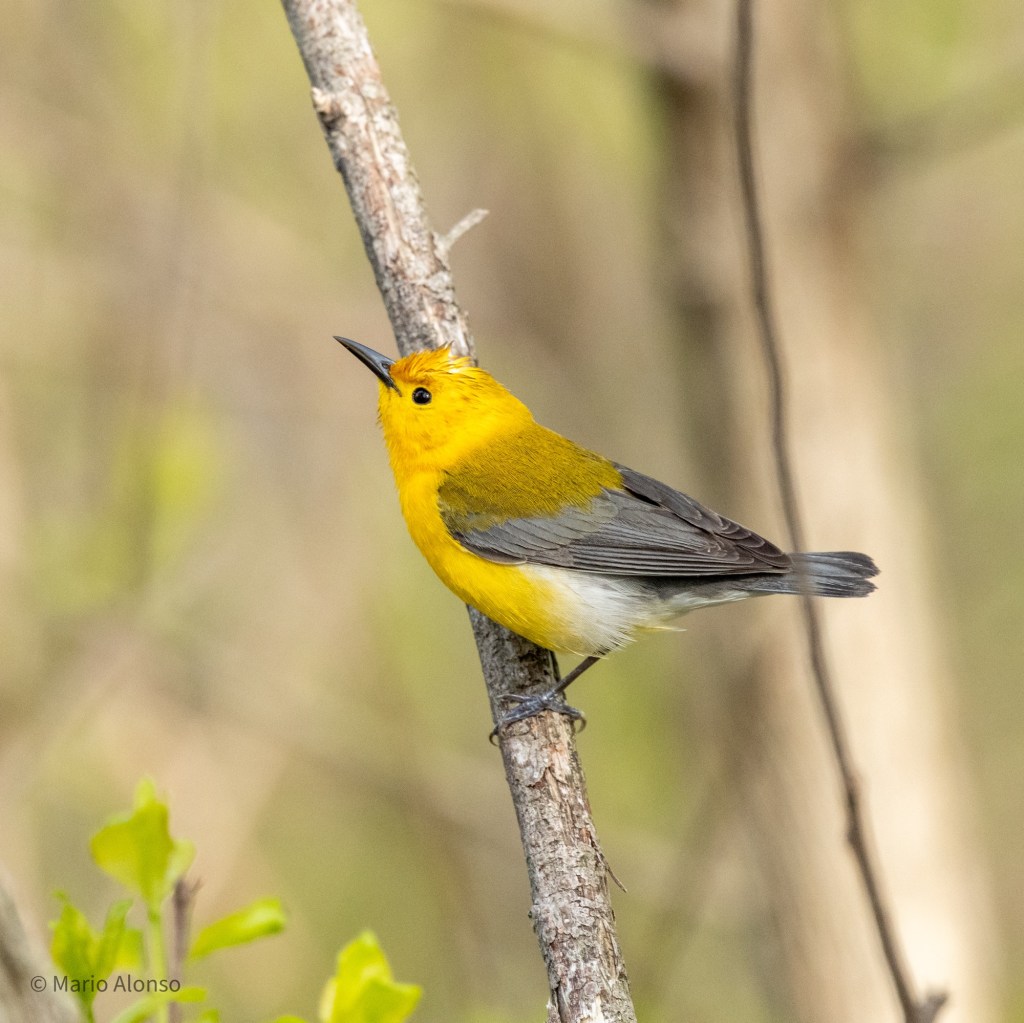
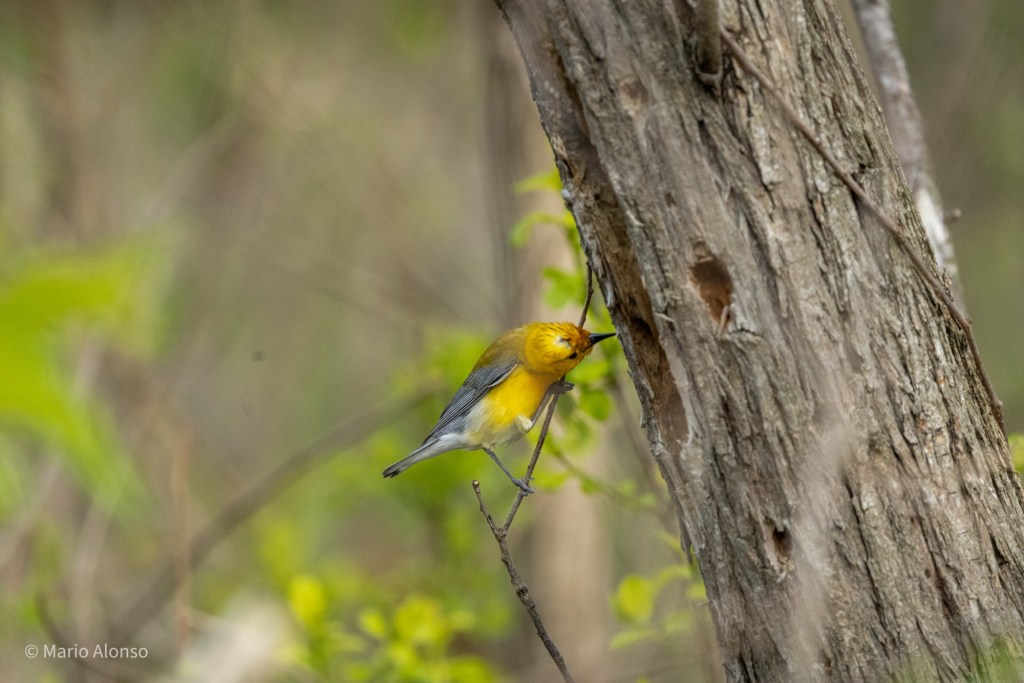
The birds themselves are the draw, of course. Warblers in spring migration are among the most challenging subjects in wildlife photography — constant movement, broken light, branches everywhere, autofocus confused by the clutter. I came away with a decent Prothonotary Warbler and a Northern Parula that the foliage was determined to obscure. A group of birders had the Prothonotary staked out in a stand of wet woodland at the east end of the boardwalk; I found it by following their lenses. The bird cooperated just long enough.
Above the boardwalk, a Bald Eagle was sitting on a massive nest — incubating eggs, indifferent to the crowd below.
Ottawa NWR: Everything Else
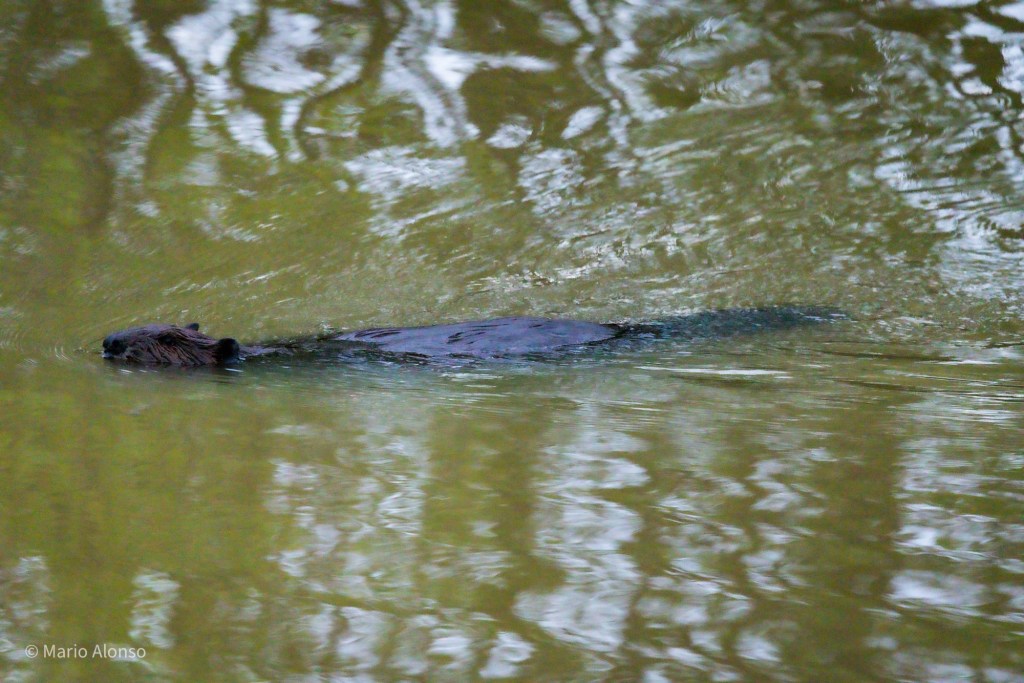
If Magee Marsh is the warbler stage, Ottawa National Wildlife Refuge is the main event for everything else. In three days of visits I recorded Bald Eagles, American White Pelicans, Purple Martins, American Coots, Sandhill Cranes, Great Blue Herons, Green Herons, Great Egrets, Tree Swallows, Yellow Warblers, Trumpeter Swans and a Gallinule, among others. On the mammal side, a Mink working the water’s edge and the largest Beaver I have seen — spotted along the narrow connecting pond on the west side of the park — were unexpected bonuses. The diversity is genuinely difficult to overstate. There is no place in Ohio I know of that comes close to Ottawa NWR in terms of wildlife density.
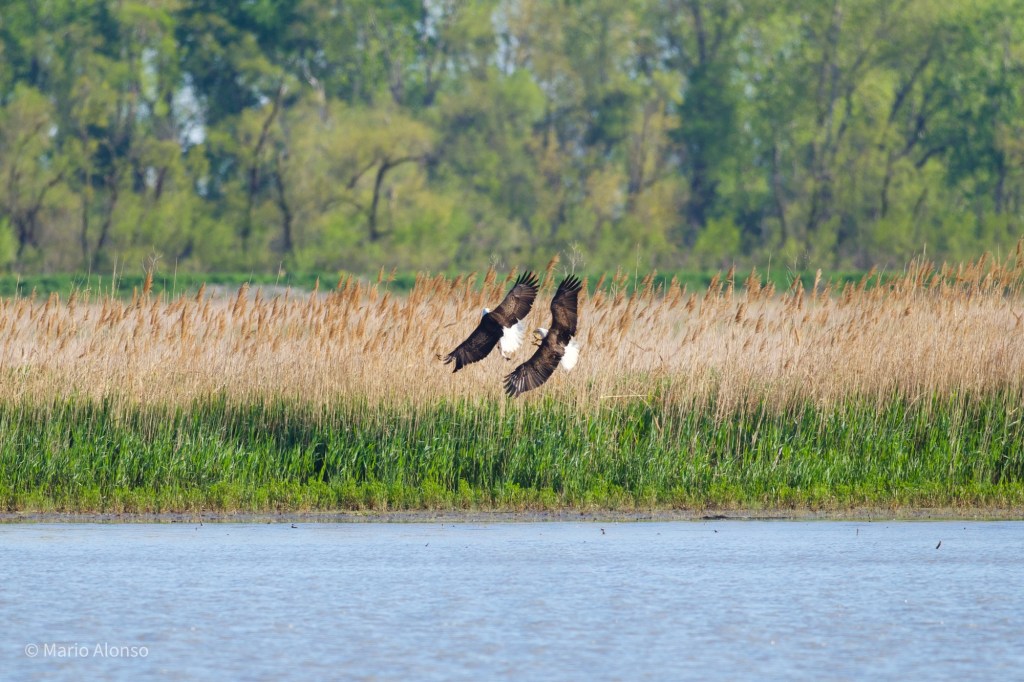
The morning of Day 3 produced the sequence I will remember longest. I was at the north pond before full light, watching the marsh wake up — swallows skimming the lily pads, herons moving from roost to feeding areas, Sandhill Cranes calling from somewhere out of sight. Then a Bald Eagle dropped from its perch and hit the water, pulling out a substantial fish in a single clean motion. Before it could clear the area, a second eagle closed in fast, intent on stealing the catch. What followed was a mid-air confrontation over the marsh — two adult eagles maneuvering in tight formation, neither willing to yield. The fish was eventually dropped into the water. Neither eagle got it. Sometimes having your enemies fight each other pays off — for the fish, anyway.
The White Pelicans were also notable — and different from the ones I had photographed weeks earlier in Yucatán. These birds were showing the fibrous plate on the upper mandible that develops during breeding season, a detail I had not seen before in the field.
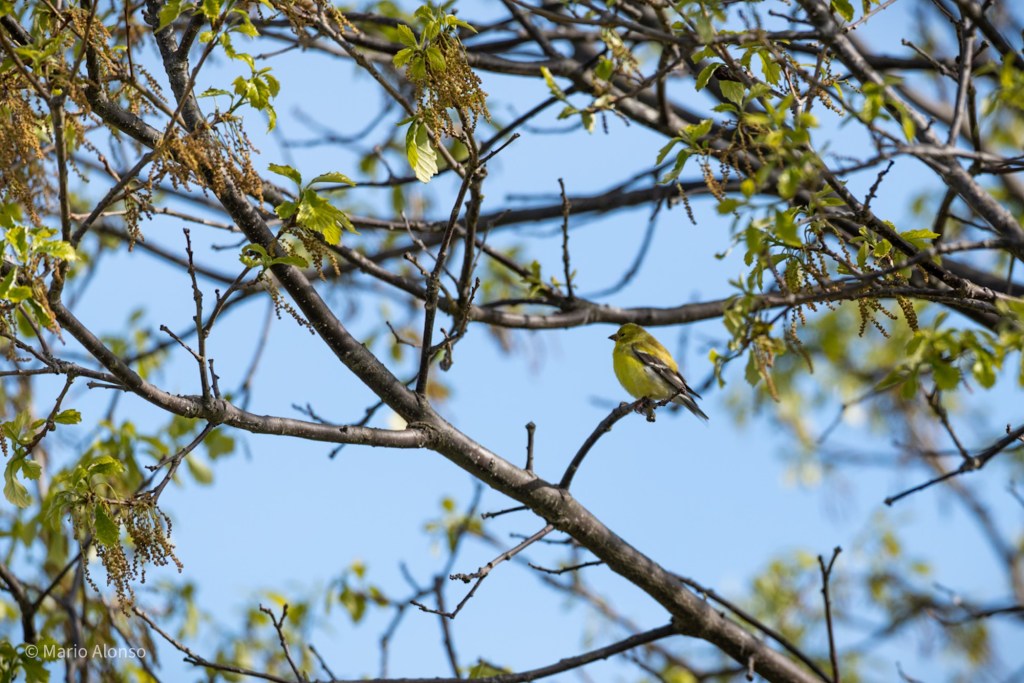
On the way back to the car I found a Prothonotary Warbler, a group of Purple Martins, and an American Goldfinch in full breeding plumage. Ottawa does not disappoint.
Maumee Bay: The Camp
Maumee Bay State Park made an excellent base. Site 036 had electric hookup, drinking water, gray water disposal, and bathrooms within easy walking distance — everything the Trillium needs. Frida approved. The park’s Trautman Nature Center boardwalk offered easy evening walks, and the lodge deck faces the lake for sunset light.
Practical Notes
Ottawa NWR and Magee Marsh are within 30 minutes of each other and function best as a pair — Magee for warblers and songbirds, Ottawa for waterbirds and raptors. Plan at least two full days.
For Magee Marsh, my main learning from this visit was that the boardwalk deserves a full morning at minimum — unhurried, slow, letting the birds come to you rather than covering ground. Because I had Frida back at the camper, I felt rushed on both mornings and paid for it in missed shots. Next time I will plan around a full uninterrupted session. Arrive early — the boardwalk fills fast during Biggest Week — but the crowd is part of the experience, and it is a good crowd.
For Ottawa, the refuge rewards walking rather than driving. The different units hold different species, and after enough visits you develop a feel for where the action is likely to be at a given time of day. My last visit covered over six miles on foot — not nothing when you are carrying over 30lb of photo equipment — but the access to areas and angles that a car cannot provide made every step worth it.
If you go during Biggest Week, give yourself more time than you think you need. Both places will use it.
All photographs: Canon R5 Mark II with RF 100–500mm f/4.5–7.1L IS USM. Maumee Bay / Ottawa NWR / Magee Marsh, Ohio. May 4–6, 2026.


Leave a Reply