May 9–13, 2026
Sandra, Frida, and I just wrapped a five-day loop through northern Michigan — Fisherman Island State Park as the centerpiece, with Harvest Host overnights bookending each end. Here’s how it went.
Day 1 — Montrose Orchards, Montrose, MI
We left Cincinnati around 10 a.m. and pulled into Montrose Orchards — our Harvest Host stop — by mid-afternoon. The farm shop was closed for the day, though we were still welcome to stay, so we settled in and took it easy. A tip from a fellow RVer who was on his second night there sent us to nearby Frankenmuth, a town styled as a Bavarian village. We visited the local cheese shop and had a beer at a brewery — pleasant enough, though it had a bit of an Epcot-Germany quality to it.
Day 2 — Arrival at Fisherman Island State Park
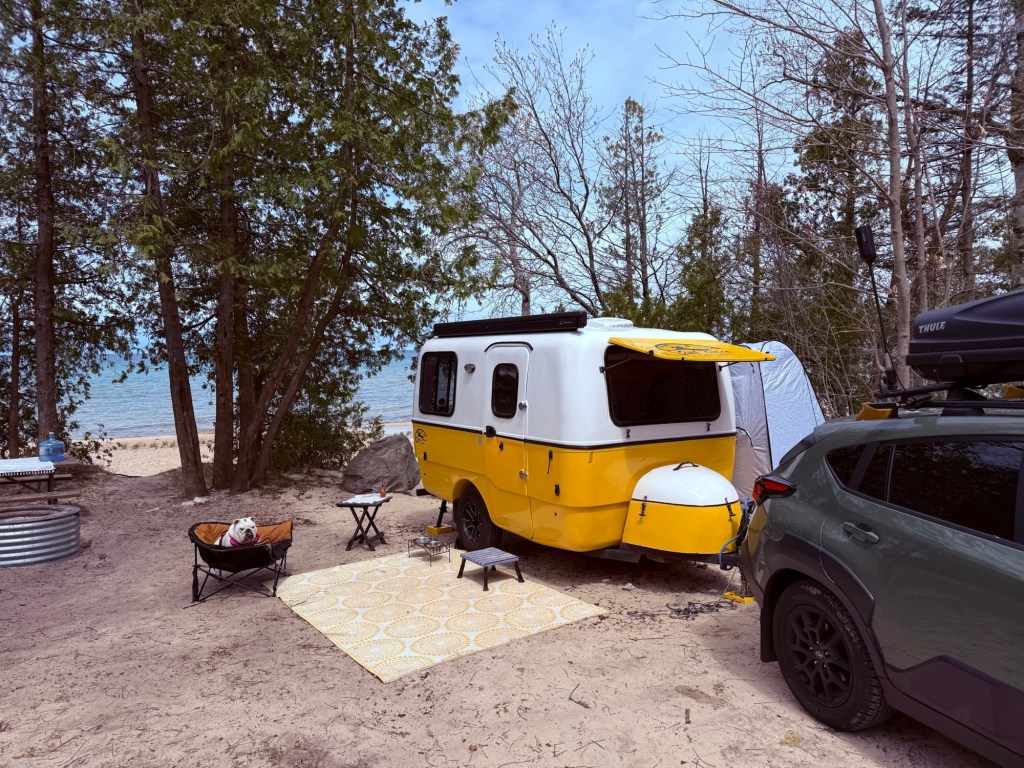
We left Montrose early, made our way north, and arrived at Fisherman Island State Park by early afternoon. We’d been trying for months to land one of the beach-facing sites, and site 30 finally came through. It sits right at the edge of the beach — the kind of spot you keep checking the reservation portal for, refreshing every few days on the off chance it opens up.
Worth noting for anyone planning a visit: Fisherman Island is no longer technically an island. Dropping water levels in Lake Michigan over recent decades have connected it to the mainland, though the name has stuck.
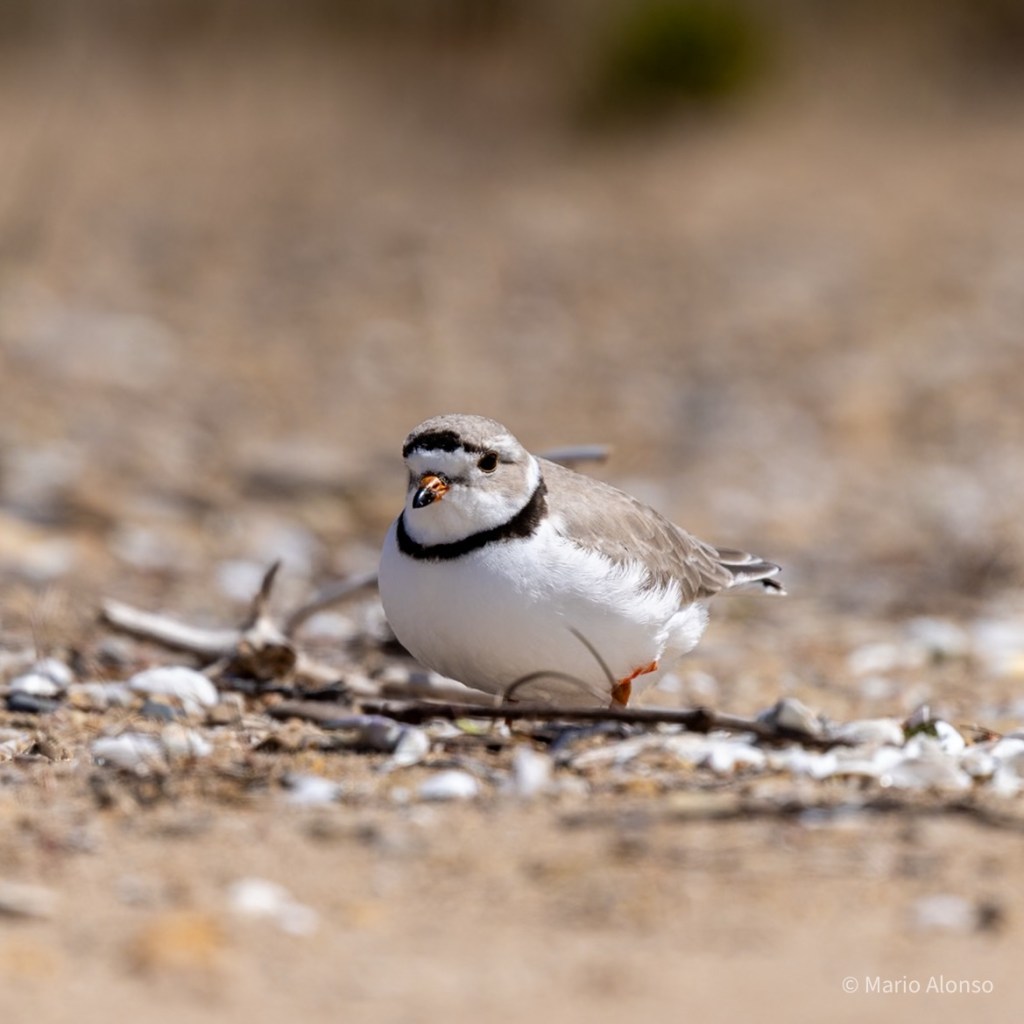
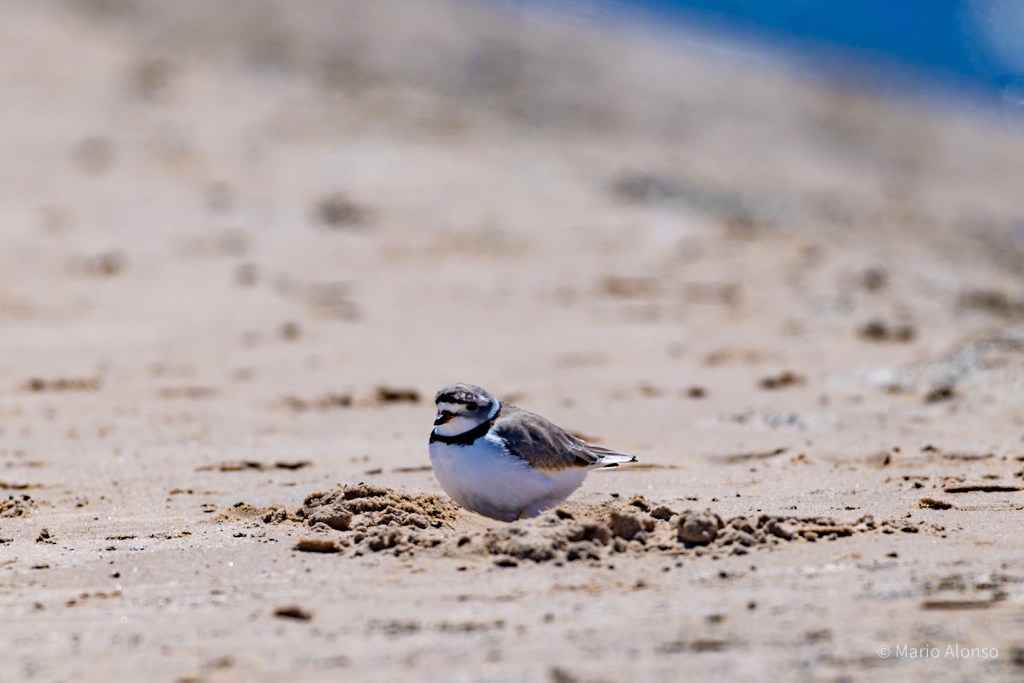
One of the first things we found on our afternoon beach walk was a cordoned-off nesting area for a pair of Piping Plovers (Charadrius melodus). This species breeds along the Great Lakes shoreline and is listed as endangered in this region, so finding an active nest site right on our doorstep was a genuine highlight. I got some solid shots of the male. Along the same stretch, a small creek entering the lake held a handful of very large trout holding in the current — worth a look if you’re passing through.
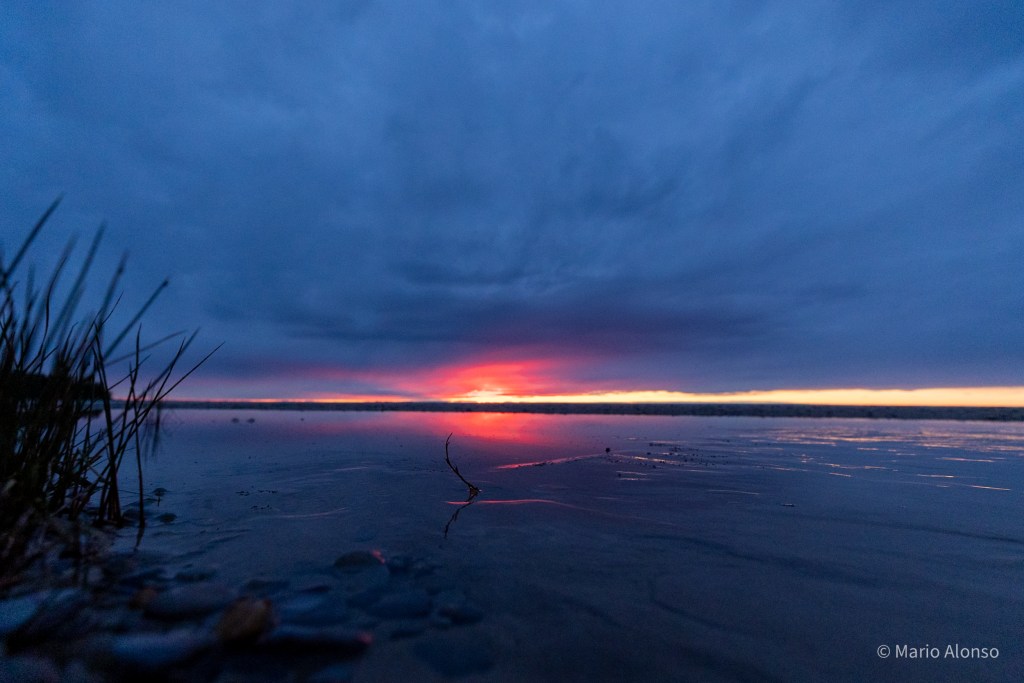
Back at camp, Sandra’s birthday gift to me made its debut: a pair of neoprene waders. Paired with a Home Depot bucket I’d retrofitted with a glass bottom for spotting rocks through the water, I probably cut a slightly eccentric figure wading around the shallows — but the Petoskey stone haul was excellent. The evening ended with a campfire and a vegetarian lasagna cooked in a cast iron pan. As the fire died down, we watched the sun drop toward the Lake Michigan horizon — from the bed in the Trillium, with the front window framing the water, the sunset was spectacular.
Day 3 — Fisherman Island, Day 2
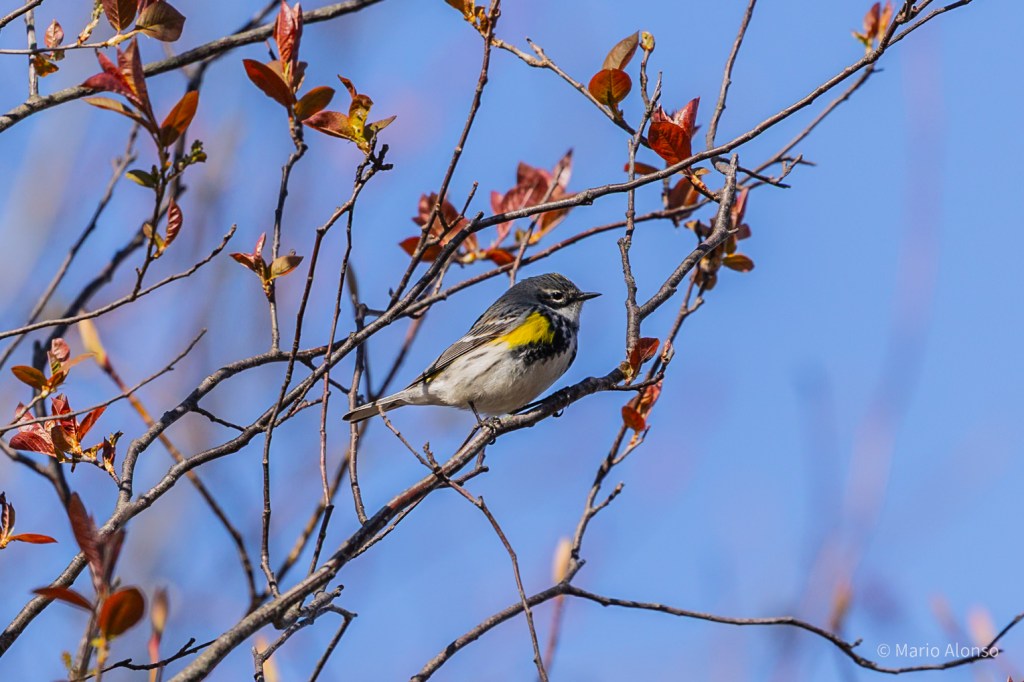
Lake Michigan was too choppy for kayaking, so we shifted to a hike on the Fisherman’s Island Nature Trail. Cold morning, clear blue skies. With Merlin Bird ID’s help we identified Nashville Warbler (Leiothlypis ruficapilla), Black-and-white Warbler (Mniotilta varia), and Yellow-rumped Warbler (Setophaga coronata) — I managed some decent shots of the latter. A pair of Bald Eagles (Haliaeetus leucocephalus) were working the shoreline as well.
On the beach side of the return loop, we found a stretch with noticeably larger Petoskey rocks. We saved the location and came back later in the day with the waders and the modified bucket. The rocks did not disappoint.
We stopped in Charlevoix for cherry pie at Friskes Farm Market and coffee at Charlevoix Coffee Company, walked Frida around town, and found the community pool, where a very welcome hot shower was available to campers.
The evening: salmon burgers, roasted veggies, and another campfire. I’d planned to do some astrophotography after 10:30 p.m., once the Waning Crescent had set, but clouds moved in and put an end to that idea.
Day 4 — The Fluff Farm, Dexter, MI
With a solid rain forecast for Tuesday afternoon and all of Wednesday, we decided to pack up after one final hike and head out. The morning was blustery and overcast — a noticeable contrast with the previous days — and we heard very little bird activity compared to our first hike. The rain arrived ahead of schedule, so we cut back to camp via the road rather than the beach trail to move faster. We hooked up the Trillium, made a last stop in Charlevoix for coffee and dry sweaters, and headed south.
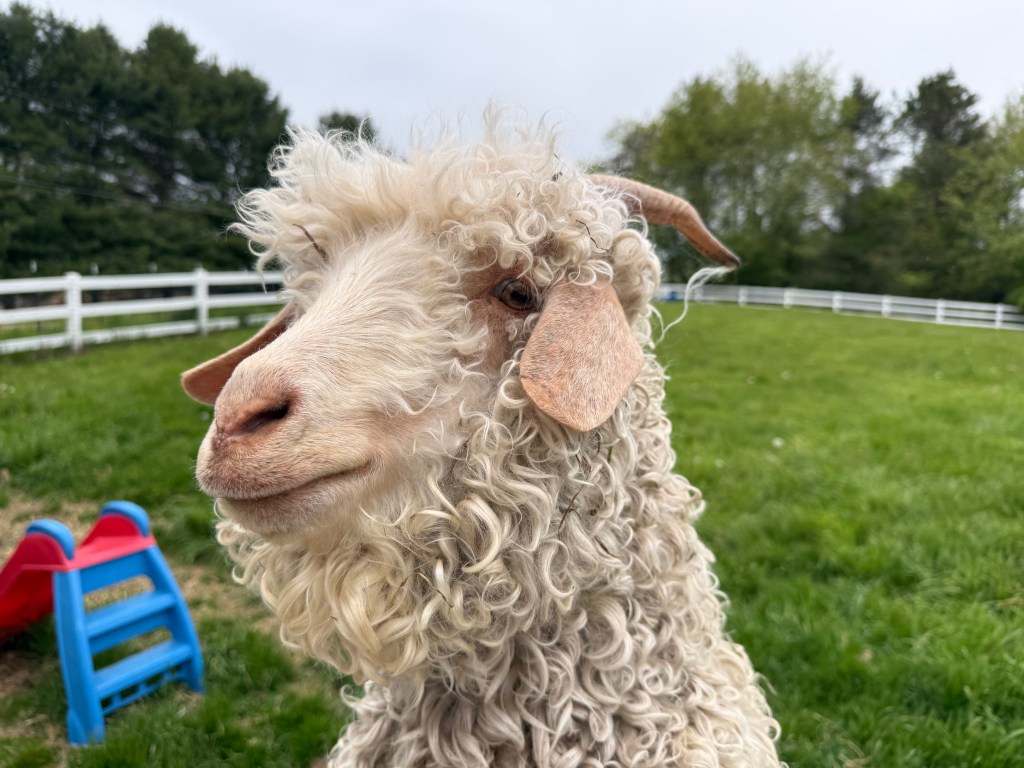
Our Harvest Host for the night was the Fluff Farm in Dexter, MI — a small goat operation with both Angora and Nigerian Dwarf goats, plus some chickens and ducks. Our host Rhain showed us around. One male Angora in particular took a strong interest in us — or possibly in Frida, it was hard to say. We picked up a delicious goat milk cheese before turning in.
Day 5 — Home
An early start, a stop at Zingerman’s in Ann Arbor for coffee and pastries (highly recommended — a genuine local institution, not a chain), and an easy four-hour drive had us back in Cincinnati before noon.
A Few Practical Notes
- Getting a beachside site takes patience. The beach-facing sites at Fisherman Island go extremely fast — we tried multiple times over several months with no luck; every time we checked, they were already taken. What finally worked was setting up an availability alert on the Michigan DNR reservation site (midnrreservations.com) for a wide window of dates, and then just waiting. Our site likely opened up because someone cancelled as the weather forecast for that week started looking bad — a good reminder that late-breaking availability is real and worth monitoring.
- Petoskey stones: don’t skip the waders. The best rocks — notably the larger specimens — were in the water, not on the dry beach. The lake in mid-May is too cold to wade unprotected. A pair of neoprene waders is genuinely worth the space in the trailer. Pair them with a glass-bottomed bucket (a Home Depot bucket with the bottom replaced by a piece of plexiglass) and your success rate goes up considerably. The glass eliminates surface glare and lets you spot rocks in the shallows before committing to picking them up.
- Northern Michigan in May: pack for the cold and have a Plan B. This region can be genuinely cold and rainy in mid-May — we had one warm, clear day and spent another morning in fleece under a grey sky, and by Tuesday the rain had moved in ahead of schedule. Bring layers, waterproof outer shells, and warm footwear. More practically, have a flexible itinerary: kayaking, beach time, and astrophotography are all weather-dependent, and you may need to swap in a hike, a town visit, or just a good book by the fire. We had planned to leave Wednesday but ended up pulling out Tuesday — having that flexibility saved the trip from ending on a sour note.
- Cell signal at the campsite is poor. Plan ahead — download offline maps (Gaia GPS or AllTrails) before you arrive, and if you need connectivity you’ll want either a signal booster or a short drive to a different area of the park.
Species mentioned in this post: Piping Plover (Charadrius melodus), Nashville Warbler (Leiothlypis ruficapilla), Black-and-white Warbler (Mniotilta varia), Yellow-rumped Warbler (Setophaga coronata), Bald Eagle (Haliaeetus leucocephalus)


Leave a Reply