This is one of nine park notes from a 48-day camper trip to Alaska and back. We traveled with Frida, our senior English Bulldog, and that shaped more of our decisions than the route did. See Traveling with a senior bulldog: the ground rulesfor the reasoning we applied everywhere.
What we made of the park
We barely saw it, and that is the honest headline.
Wrangell-St. Elias is the largest National Park in the United States. A ranger put it to us in the way that finally made it land: it is bigger than Switzerland. Thirteen million acres. Four mountain ranges converge inside it. Nine of the sixteen highest peaks in the country are in there.
We spent two days at its edge and came away having seen the mountains from a highway, which is roughly what most visitors manage. So this entry cannot give you a verdict on the park, because we did not earn one. What it can give you is an honest account of how hard it is to get inside a place this size, a campground booking that fell apart, and a very good day in Valdez that we would not have had if the plan had worked.
That is a more useful post than a pretend verdict.
The stay
| Campground | King For A Day Campground and Charters, Copper Center, AK, rustic |
| Nights | August 27, 2026 (one, of a planned two) |
| Arrival drive | Anchorage to Copper Center, 191 miles, 3h 24m |
| Day two | Valdez, then on to Tok rather than a second night |
The approach
A very good breakfast at SunStar in Anchorage and then out on Alaska 1. The scenery did what it does in this part of the world, oscillating between beautiful and breathtaking, while the frost heaves became steadily more frequent underneath us.
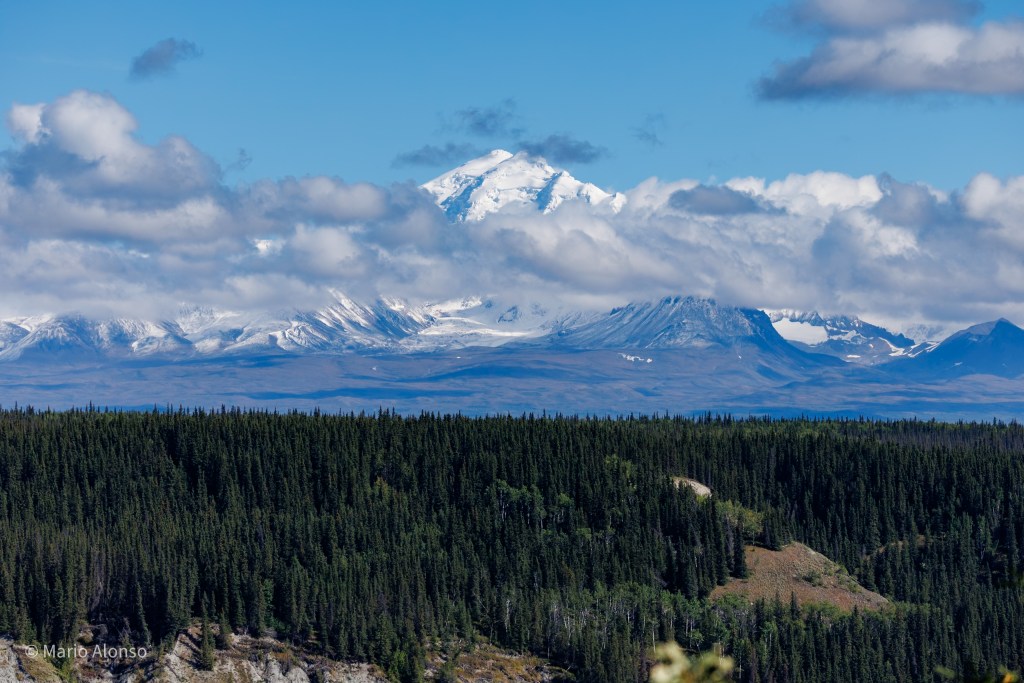
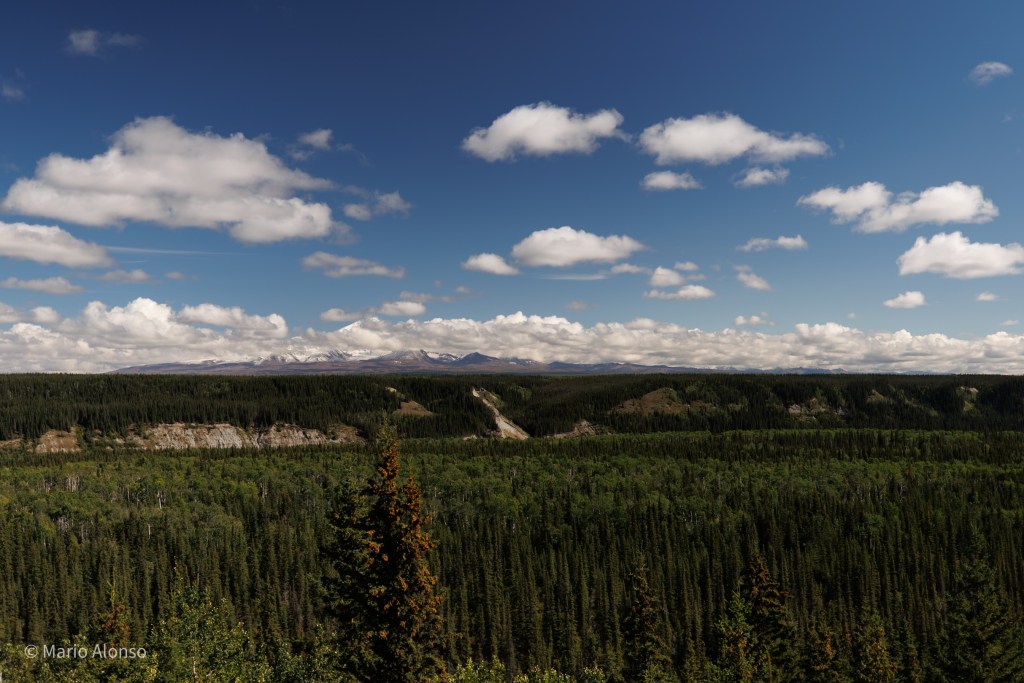
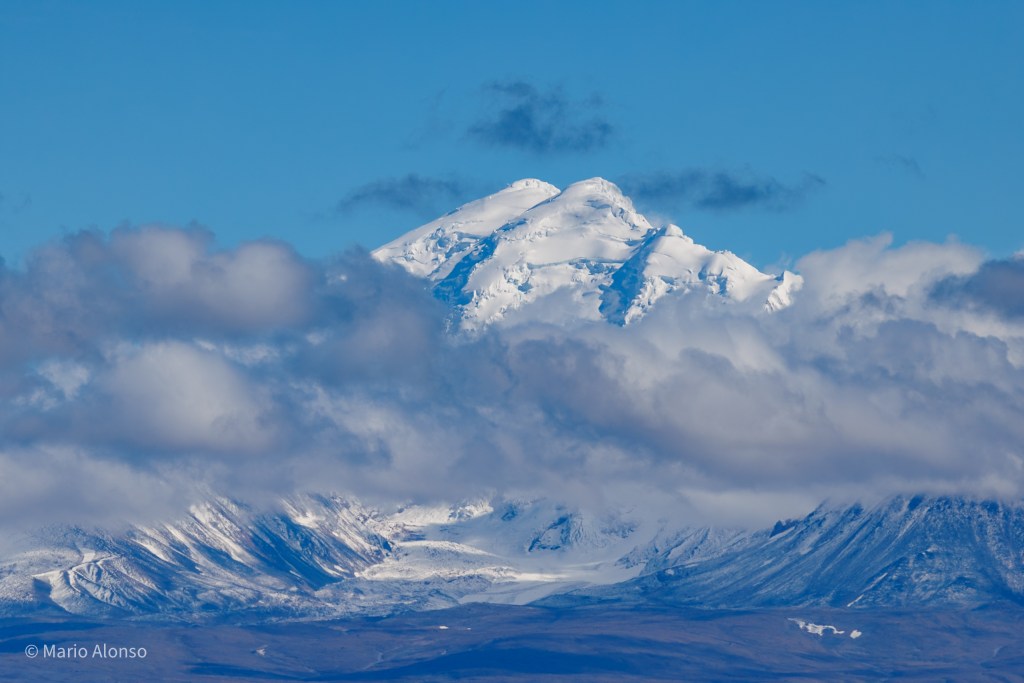
Then the mountains arrived on the horizon: Mount Drum, Mount Wrangell and Mount Blackburn, enormous and snow-covered, standing up out of the Copper River basin. Mount Wrangell is an active volcano. Blackburn is the fifth highest peak in the United States. They are visible from the road for a long way, and they are the single best argument for making this drive even if you do nothing else.
The problem with a park this size
Wrangell-St. Elias joins Kluane, Glacier Bay and Tatshenshini-Alsek in the World Heritage property I wrote about in the Kluane entry: roughly 98,000 square kilometres across two countries, about the area of South Korea, or of Indiana.
The trouble with that scale is that it defeats casual visiting. There are two roads into the park worth taking, and both are long gravel drives. Doing either one properly, with any hiking at the end of it, means committing the better part of two days. When I planned this trip that looked unrealistic to attempt on day 35 of 48, and having now driven the Alcan I think that judgment was correct.
The alternative is to hire a small aircraft, which is the way most people who actually see this park do see it. We did not, and that is the gap in this entry.
Where the planning failed
So the plan was modest. Two nights at a campground next to the park boundary, and a day taking flossing lessons.
Flossing, for anyone whose mind went where mine did, is a salmon fishing technique, not oral hygiene. It is how people take king salmon on the Klutina and Copper rivers, and I had arranged lessons by email well in advance.
The campground was a disappointment from the moment we pulled in: unattractive, close to unsettling, and nearly empty. Then we were told that the king season was over and the lessons were not happening, despite the email confirming them.
There was nothing to be gained by arguing. Thirty-four days into a very good trip, this was the first time my planning had been beaten by something outside my control, and I want to be fair about what that something was: a booking confirmed in writing and withdrawn on arrival, with no notice that would have let us change anything.
The practical lesson is narrow and worth stating. Confirm any activity booking in this area again, close to the date, before you build a day around it.
We regrouped over the afternoon and decided to spend the following day in Valdez instead.
Chasing a full moon
It was a full moon that night, and I wanted a forced-perspective shot of it coming up behind the Wrangells.
We drove back to the visitor centre around eight to get a clear line to the horizon. The gates were shut, which we took to mean closed to vehicles, so we walked in past them. The mountains under the last of the golden light were genuinely impressive.
And then clouds built along the horizon and swallowed the moon before it cleared the peaks. Foiled by cloud again. That is twice on this trip that a new or full moon lined up perfectly and the sky declined to cooperate.
We drove back to camp with mixed feelings. Awesome views, a plan in pieces, and a minor inconvenience inside a great trip.
Valdez
We woke at seven to rain that did not stop all day, and the three of us got in the car and drove south.
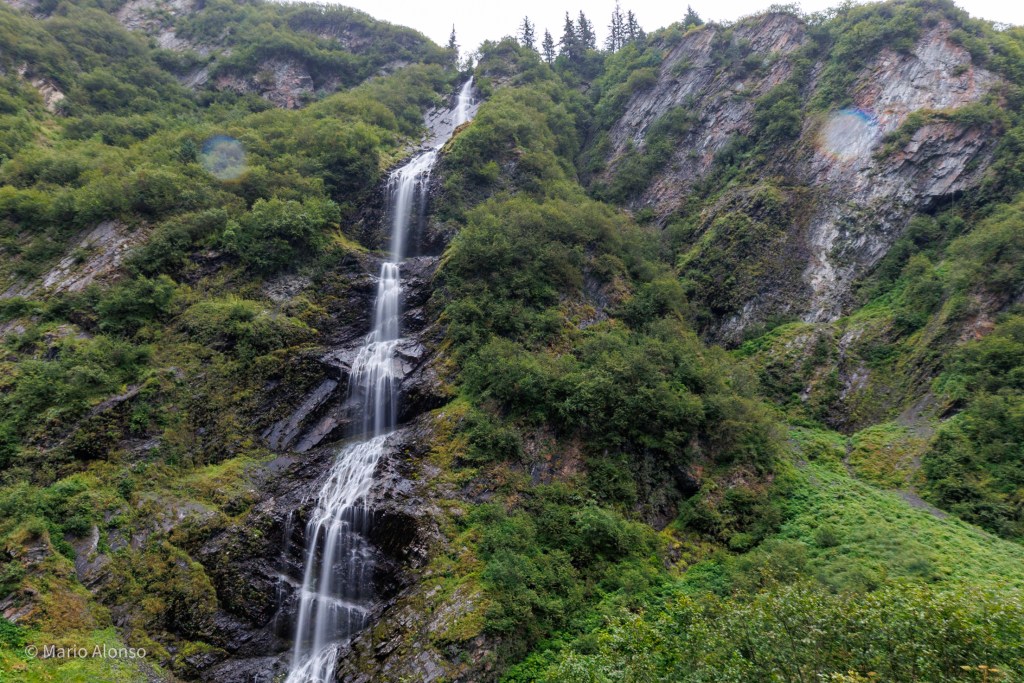
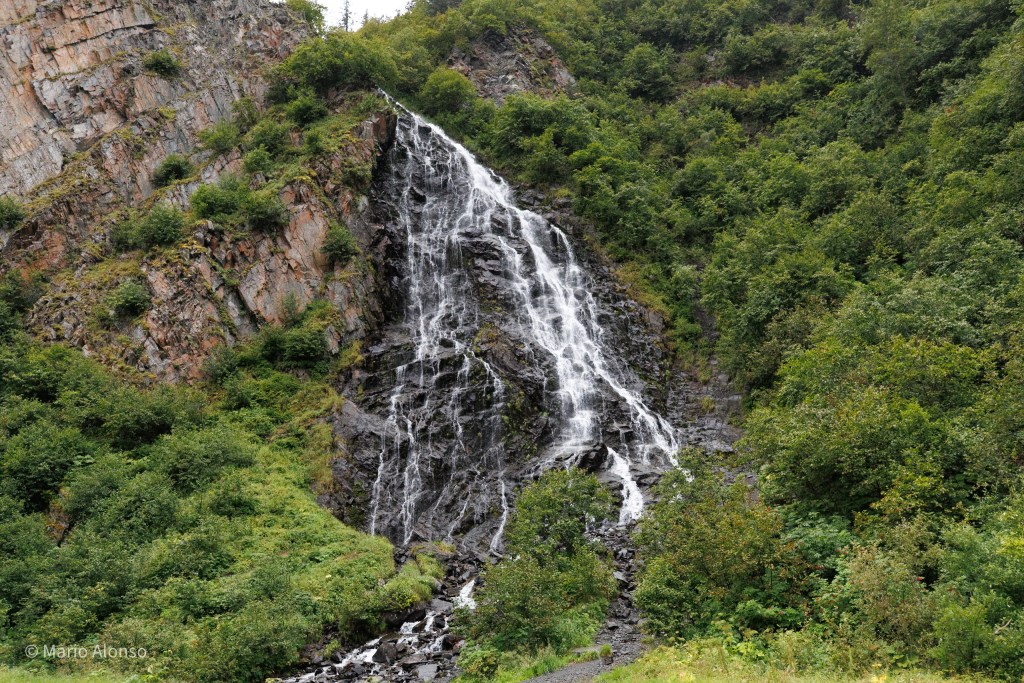
It is a shade under two hours and the scenery is excellent throughout. The Worthington Glacier is plainly visible from the highway. After that the country closes in and becomes canyon, and then you reach Keystone Canyon, three miles of narrow gorge on the Lowe River carrying more waterfalls than anyone has bothered to name. The two you stop for are Bridal Veil, which drops around 600 feet and is the tallest roadside waterfall in Alaska, and Horsetail, which is shorter and more interesting, splitting into multiple strands down the rock face.
There is a half-finished railroad tunnel in that canyon too, and the story behind it runs straight back to the park we had just failed to enter. In the early 1900s rival companies fought over the route from Valdez to the copper at Kennecott, which sits inside what is now Wrangell-St. Elias. The competition ended in an armed standoff in the canyon in 1907, the railroad went to Cordova instead, and Valdez’s tunnel was abandoned where it stood.
Valdez itself is a surprise. The name is fixed in most people’s minds to one event, the 1989 tanker grounding on Bligh Reef, and the connection is real: Valdez is the southern terminus of the Trans-Alaska Pipeline, and the Exxon Valdez had just loaded there when it went aground. But the town is picturesque and likeable, ringed by green mountains that will be white shortly, with a bay full of fish.
The week we arrived was the fishing derby. The leading salmon at that point was 18.8 pounds, which is a considerable dinner.
Coffee at The Coffee Co., then the shops and a walk around town. We drove out to Valdez Glacier Lake, which is fed by the glacier of the same name and carries enormous chunks of floating ice.
Solomon Gulch
Then across the bay to the Solomon Gulch Hatchery, and this turned out to be the best hour of the two days.
We heard them before we saw them. Sea lions barking, loud enough that we stopped the car and walked to the water’s edge, where a couple of them were working through salmon. Looking past them into the shallows, there was what I can only describe as a river of fish inside the water, a dense unbroken column of Pink Salmon (Oncorhynchus gorbuscha) moving along the shoreline toward the hatchery.
At the hatchery itself it stopped being a column and became a wall. Tens of thousands of fish massed against a blocked stream, pushing.
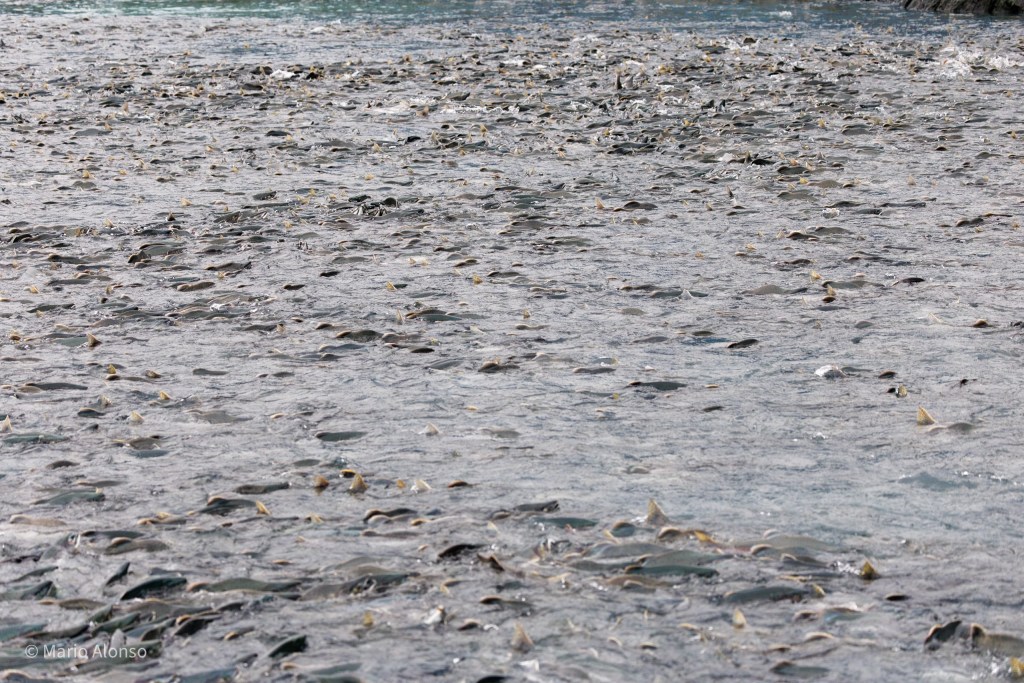
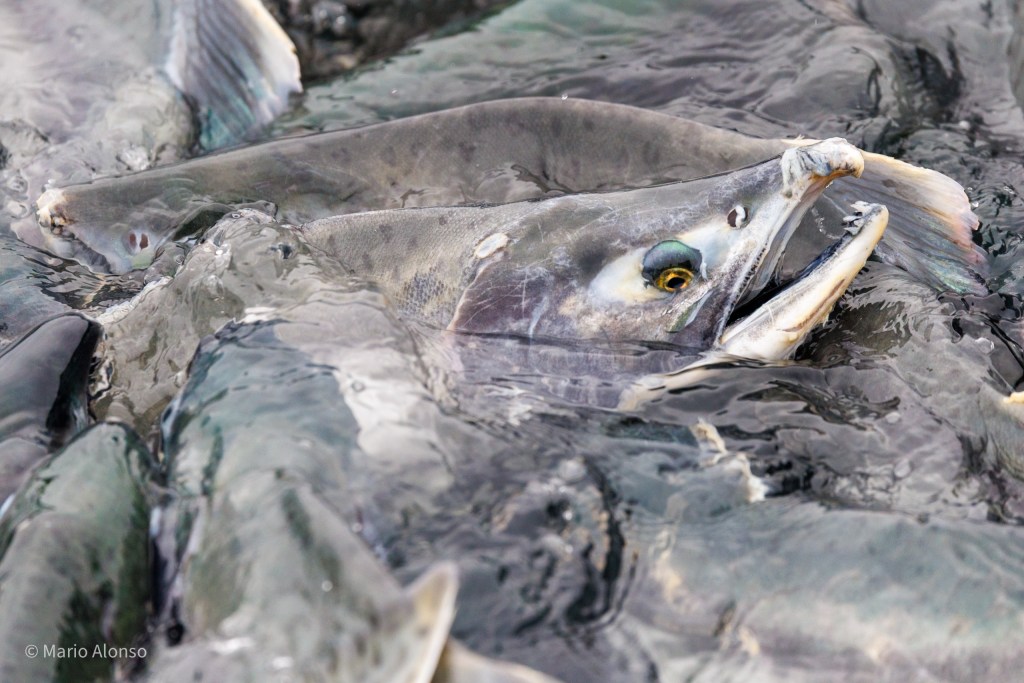
It is worth understanding what you are looking at, because it is not a fish farm. Solomon Gulch is an ocean-ranching operation, and nothing there is grown to market size in captivity. Returning adults are trapped at the weir and fish ladder, ripe fish are stripped, the eggs are fertilised and loaded into incubators, and the young fish go out to sea to live an ordinary wild life. The purpose is to stabilise the pink salmon supply the local fleet depends on.
Lunch afterwards at The Fat Mermaid, where the salmon was excellent, which felt like the right way to close the loop.
Tok, and a second town that burned
We drove back to the campground and made a call: rather than take the second night we had paid for, we would push on to Tok and shorten the next leg.
The road to Tok runs around the north side of Wrangell-St. Elias, so we got the mountains again from a completely different set of angles. It was the most of the park we saw all trip, and we saw it from a highway while leaving.
We arrived in Tok uneasily. We had stayed there eleven days earlier and left on the morning of August 17, and the Mukluk Fire started in a backyard along the Alaska Highway shortly before noon that same day, sparked by a power line brought down in high wind. By the time we came back it had burned more than 7,300 acres and destroyed 50 homes and 108 outbuildings in a town of about 1,500 people.
We saw no damage near the RV park. That does not mean much in a town that small.
Jasper in 2024, Tok in 2026. The second community on this trip living with what a fire did to it.
The campground
I cannot recommend King For A Day.
The setting has one genuine virtue, which is proximity: it puts you near the park boundary and within reach of viewpoints that give you clean lines on Drum, Wrangell and Blackburn. That is not nothing, and it is the reason we booked it.
Everything else was a disappointment. It is rustic, unattractive, and was nearly empty while we were there, which in late August next to the largest National Park in the country tells you something. And the activity we had arranged in writing was cancelled on arrival.
If you need a base on this side of the park, look at the Forest Service and state campgrounds along the Richardson and at the options nearer Glennallen, and confirm anything you have booked again shortly before you travel.
Traveling with Frida here
- Shade: Adequate. Rustic sites on the Copper River basin, open in places.
- Cooling: Rustic, no hookups. Interior Alaska in late August required nothing.
- Where she could come: All of it. The Valdez day was the three of us in the car from seven in the morning until evening, and it was one of her best days of the trip.
- Where she could not: Nowhere that mattered.
- Dog care: None arranged, none needed, for the first time in Alaska.
- The midday block: Not a factor.
After Denali and Katmai, which between them took four full days away from her and months of arranging, this was the leg where the dog logistics simply dissolved. It is worth saying that a long trip with an old dog is not uniformly hard. Some stretches ask everything of you and some ask nothing, and the ones that ask nothing are often the ones you did not plan carefully.
Verdict
The park. I am not going to rate a park I saw from a road.
What I can tell you is this. The scale is not an abstraction, and the mountains from the Richardson and from the Tok Cutoff are worth the drive on their own. But if you want to be inside Wrangell-St. Elias rather than beside it, you need either two full days for the McCarthy or Nabesna gravel roads, or the money for a flight. Budget one of those before you go, or you will do what we did.
We will come back and do it properly.
The campground. Do not book King For A Day on the strength of an email. See above.
Valdez. Go, even in rain. Keystone Canyon, the glacier lake, and Solomon Gulch during the pink run are worth a day by themselves, and the salmon at Solomon Gulch was the most extraordinary thing we saw in this part of Alaska.
See more
- Photos from Wrangell-St. Elias National Park in the gallery
- Traveling with a senior bulldog: the ground rules, the reasoning behind every camping decision in this series

 Looking 4 Nature
Leave a comment