This is one of nine campground notes from a 48-day camper trip to Alaska and back. We traveled with Frida, our senior English Bulldog, and that shaped more of our decisions than the route did. See [Traveling with a senior bulldog: the ground rules] for the reasoning we applied everywhere.
What we made of the park
We loved Glacier, and two nights was not enough. We left already agreeing that we have to come back and give it four or five.
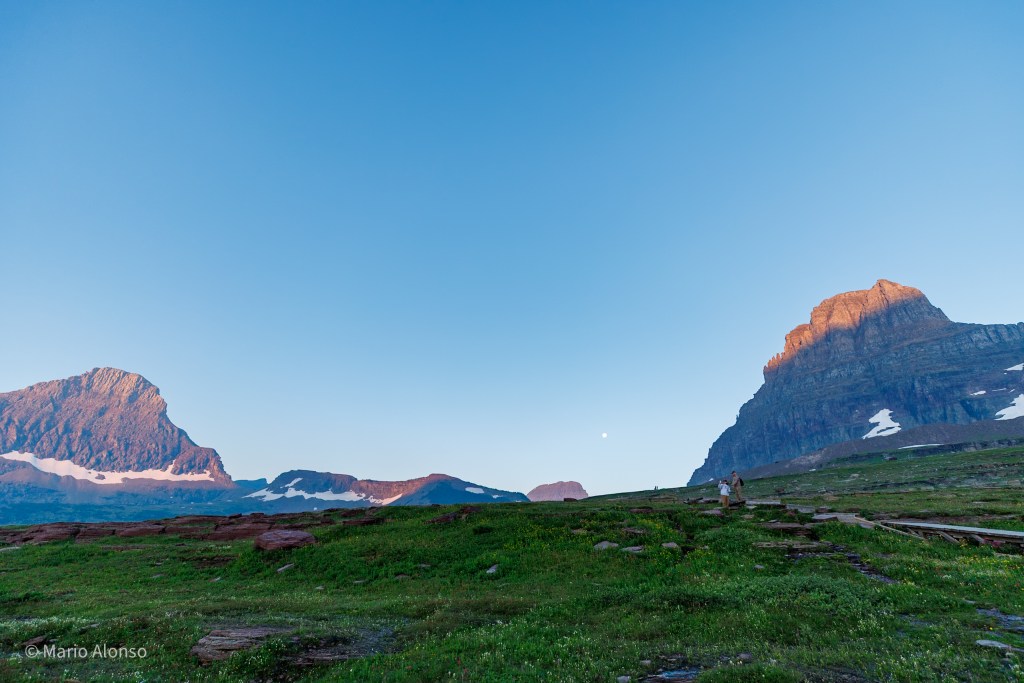
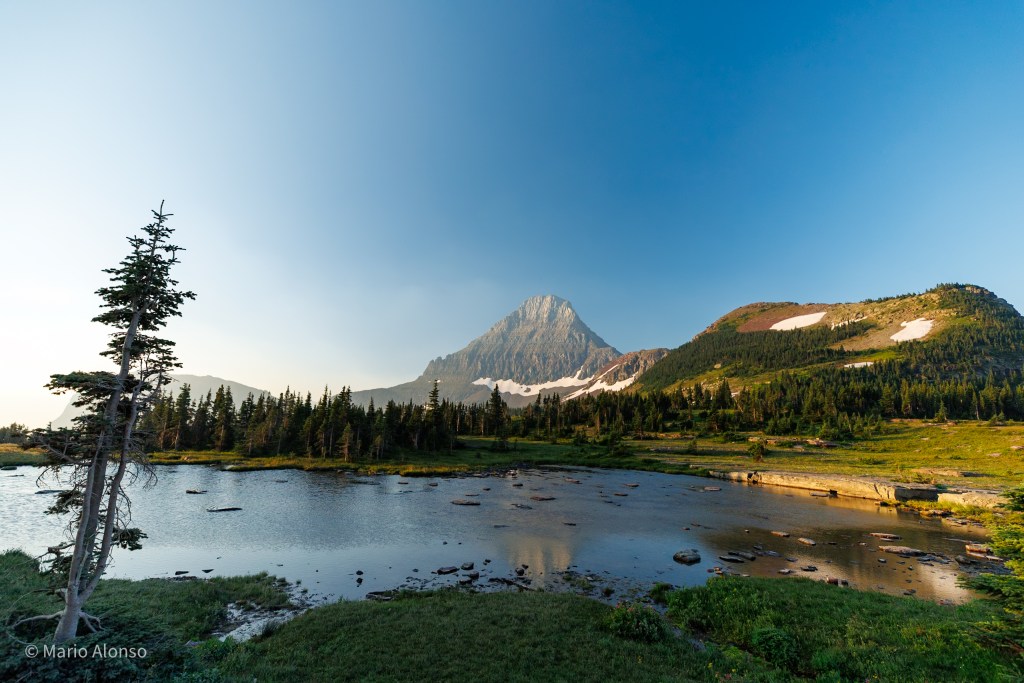
The dawn on Hidden Lake trail is the reason. Nothing anyone can tell you sets the scene for that place at sunrise: hillsides covered in wildflowers, streams and small waterfalls running through them, and wildlife everywhere you looked. It was the best morning of the trip to that point, and I say that having spent the previous morning somewhere I also loved.
The one wrinkle was the smoke. Haze from the Oregon wildfires sat over the park the whole time and obscured views I am certain are more spectacular than what we got. It was a real downside and it did not come close to spoiling the visit. If anything it made the case for returning.
We were sad to leave.
The stay
| Campground | Fish Creek, Glacier National Park, MT |
| Site | D162, rustic, no hookups |
| Nights | July 30 and 31, 2026 |
| Cost | $60 for two nights |
| Reserved | Recreation.gov, 100 percent reservable, six-month rolling window |
Getting there
We left the Ledgestone in Billings around 5:30 a.m. into drizzle and the hotel sprinklers, which is a combination that does not encourage lingering. Coffee from the Starbucks next door, then two-hour driving intervals west.
The stop worth recording is Crooked Tree in Great Falls. Very good coffee and ham and Swiss croissants, and a better reason to break the drive than a gas station.
We came in through the west entrance and went straight to the visitor center for information and souvenirs.
The campsite
D162 was the best campsite of the trip to that point, and it was not luck.
It is heavily shaded, close to twice the length of most sites in the campground, and a creek runs right alongside it. That last part is not an accident of our booking: Fish Creek’s D162, D164 and D166 sit directly on the creek, and they are known for it. Which is the whole lesson. Fish Creek is entirely reservable through Recreation.gov on a six-month rolling window with no first-come sites at all, and the good ones go in minutes. It pays to reserve early and to do your homework on the individual site rather than just the campground.
The sites are rustic with no hookups of any kind, but each loop has restrooms with electrical outlets, which turned out to be genuinely useful for recharging camera batteries. There is potable water throughout and a dump station near the entrance.
The one real limitation is showers. There are four, all of them in Loop A, and no parking at the shower house, so from Loop D you are walking. For us that was a minor thing on a two-night stay. On a longer one it would matter more.
Two nights at D162 cost $60. Two nights in the cabin outside Badlands cost $238.23. Same trip, three days apart, and the cheaper of the two was the better campsite by a wide margin. That is the general rule: camping inside a National Park is inexpensive, and what you pay for outside the gate is infrastructure. The only question is whether you need the infrastructure on that particular day.
For a dog, the shade is the point. Fish Creek is heavily forested with tall conifers and the canopy holds all day. Worth naming the tension though: the same canopy that keeps a bulldog comfortable is why solar underperforms here. If you are running a rustic site off panels, a shaded site is a real trade, and it is the opposite of the trade we made at Badlands three days earlier.
Day one: John’s Lake Loop
Late lunch at the site and a rest after the long drive, then the John’s Lake Loop, which combines a riverside stretch, several waterfalls, forest, and a small lake. A good first hour in the park and an efficient introduction to what the west side looks like.
First impressions of Glacier were strong. The one shadow over the whole visit was smoke. The haze from the Oregon wildfires had followed us from South Dakota and was sitting over Glacier too.
Day two: Logan Pass at dawn
Up at 4:15 a.m. Fed Frida, got her out, brewed coffee, rolling by 4:45.
Going-to-the-Sun Road in the dark is a slow drive by necessity. Partly for the animals, and partly because it is a narrow winding road with rock wall on one side and cliff on the other. We were at Logan Pass before 6:00 and on the Hidden Lake trail shortly after.
Nothing anyone tells you prepares you for that place at sunrise. The hillsides were covered in wildflowers with streams and small waterfalls running through them. At one point I half expected Julie Andrews to come over the ridge singing about the hills being alive.
About six miles with 1,227 feet of gain, so a proper workout without being a long day. I carried the 100 to 500mm on the body and a backpack with a shorter lens and a macro, and I swapped lenses at least six times. That is the honest cost of a morning where the subject changes from a bighorn ram on scree to a wildflower at your boot in the space of fifty meters.
Wildlife was constant: Hoary Marmot (Marmota caligata), Mountain Goat (Oreamnos americanus), Mule Deer (Odocoileus hemionus), bighorn rams (Ovis canadensis), a Bald Eagle (Haliaeetus leucocephalus), and several squirrel species I never pinned down.
The frustration was the haze. Oregon smoke obscured what are certainly more spectacular views, and there is nothing to be done about it except note it and come back.
On the drive down we saw a bear go into the woods beside the road, moving too fast to identify while we were driving. Lunch was a proper sit-down at Lake McDonald Lodge. We finished with a lakeside dinner and our feet in the cold water, which after a 4:15 alarm and six alpine miles is the correct way to end a day.
Traveling with Frida here
This is the stay where the dog logistics stopped being about heat and started being about rules.
Glacier is not a dog-friendly park, and the restriction is absolute: pets are not permitted on any trail in the park, anywhere, including the backcountry, nor along lake shores outside developed areas, nor in any building. They are allowed in the campground, in picnic areas, in parking areas, along roads, and in the car. Leash of six feet or shorter. Critically, pets may not be left tied and unattended.
That last clause is what forces the decision. Hidden Lake at dawn is not a hike Frida could do at any age, and leaving her alone at the site was not an option either.
Our default is Rover, and at Glacier Rover had nothing. That is worth saying plainly, because if you plan around a national platform you may find it simply does not reach the places where you most need it. West Glacier in high season is exactly such a place.
What we found instead was a local operator, Happy Tails 406, (406) 285-8588, happytails406.wordpress.com. Two visits on the 31st, roughly an hour each, to get Frida out of the camper and stay with her while we were up at Logan Pass.
The detail worth stealing is the lead time. We signed their service agreement on February 3, almost six months before the hike! At that point we did not yet have a site at Fish Creek, so the agreement named the West Glacier KOA. When the Fish Creek reservation finally came through we amended it to the new location.
That sequence is the practical lesson. Both bookings run on roughly the same six-month horizon, but the dog care is the one you can lock in before you know where you will be sleeping, and then move. If your trip depends on someone caring for your dog on one specific day in a small mountain town in high season, treat it as a reservation in its own right: book it early, and amend it later rather than waiting for the campsite to resolve first.
We used the first visit and cancelled the second, because by then the day had turned too hot for a second hike and we were heading back to camp anyway. Their terms require notice at least 24 hours ahead or the service is billed in full, so we paid for both. That is a fair term, plainly stated in the agreement we signed, and the mistake was ours rather than theirs. The service itself was very good and we would use them again.
- Shade: Excellent. Heavily forested, full canopy, and D162 in particular.
- Cooling: No hookups, so shore power is not an option here. Glacier’s valley temperatures made that workable in a way the Badlands did not. Note that the deep shade also suppresses solar.
- Where she could come: Campground, roads, pullouts, picnic and parking areas, the car. The Apgar bike path when snow-free, and the Lake McDonald beach at Apgar on leash.
- Where she could not: Every trail in the park. Also lake shores outside developed areas, the backcountry, and all buildings.
- Dog care: Rover does not cover West Glacier. We used Happy Tails 406, booked in February and amended when the campsite changed.
- The midday block: Not the constraint here. The constraint was the whole hiking day, which is a different problem and needs a different solution.
Worth flagging for anyone planning the same route: this changes at the Canadian border. In Banff, Jasper and the Parks Canada system generally, dogs are welcome on most trails on leash. Coming from Glacier that is a striking reversal, and it is worth knowing in advance so you plan the US parks around a sitter and the Canadian ones around bringing her.
Verdict
The park. Two nights was too few, and that is the main thing we would change. Glacier is the park on this trip we most want to return to, and four or five nights is the number we settled on before we had even crossed into Canada. Come when the air is clear if you can. We saw a version of Glacier with the contrast turned down and it was still the best two days of the trip to that point.
The campground. Fish Creek is the best campground of the trip so far by a wide margin, and D162 specifically is worth setting an alarm to book.
Reserve six months out, because the whole campground is reservable and none of it is first-come. Pick your site by number rather than trusting the campground average, and take a creekside site in D loop if you can get one. Accept that showers mean a walk from anywhere but Loop A, and that a shaded site and a working solar panel are not compatible here. At $30 a night, none of that is much to accept.
See more
- Photos from Glacier National Park in the gallery
- Traveling with a senior bulldog: the ground rules, the reasoning behind every camping decision in this series
 Looking 4 Nature
Leave a comment