This is one of nine park notes from a 48-day camper trip to Alaska and back. We traveled with Frida, our senior English Bulldog, and that shaped more of our decisions than the route did. See Traveling with a senior bulldog: the ground rules for the reasoning we applied everywhere.
What we made of the park
Banff is beautiful, and it is beautiful in a particular way that is worth naming: The town matters to us more than it would to most visitors. We spent our honeymoon here, and coming back decades later made the whole stop mean something beyond the scenery. We love the place.
And the scenery is relentless. There are gorgeous vistas almost anywhere you stand, and everything is curated and immaculately maintained. Trails are paved where they need to be, viewpoints are built out, transit runs, signage is excellent. That polish is exactly what lets a park absorb the number of people Banff absorbs.
It also costs something. The sense of being out in the wild is thinner here than in the places we went next. Jasper, Kluane and Denali all feel less managed and more like you are actually out in it. Banff is arguably the most beautiful, but also the least wild, and which of those matters more to you will determine whether you leave satisfied.
We were. But we noticed.
Getting there the long way
We left Glacier National Park before sunrise, sorry to go. We had already agreed we need to come back to Glacier and give it four or five nights instead of two.
Hauling the Trillium meant Going-to-the-Sun Road was not an option. Glacier restricts vehicles and vehicle combinations longer than 21 feet or wider than 8 feet between Avalanche Creek and Rising Sun, with a further advisory against anything over 10 feet tall west of Logan Pass because of the rock overhangs. Almost no tow vehicle and trailer combination comes in under 21 feet. So we went south, then east, then north to St. Mary, and crossed into Canada at Chief Mountain, where we were met by the friendliest border agent of the trip. About 319 miles and just under six hours.
We stopped at Waterton Lakes, Glacier’s sister park across the line. The two were joined in 1932 as the world’s first international peace park, and crossing between them in a single morning is the clearest way to feel why. A roadside farmer’s stall on the way produced excellent peaches and cherries.
Then Banff, thirty-seven years after we spent our honeymoon here. Yes, we are getting old.
Smoke
The mountains were hidden. The same Oregon smoke that had followed us across South Dakota and Montana was sitting in the Bow Valley, and on the first evening Banff was a town with the scenery switched off.
Dinner was at Zyka Elevated Indian Cuisine, a reservation made months in advance, and it was worth the planning. Then an early night, because the smoke had already forced us to rewrite the next day.
Rewriting the plan
The plan had been Lake Louise at dawn and Moraine Lake after. Both are photographs of mountains reflected in water, and neither works when you cannot see the mountains.
So we swapped the vista day for a canyon day, on the theory that a slot of rock and falling water does not care about the ceiling. We had also read that Johnston Canyon gets crowded, so we went first thing.
Johnston Canyon and the Ink Pots
We pulled in at 6:30 a.m. and there were already a few cars. That should have been the first hint.
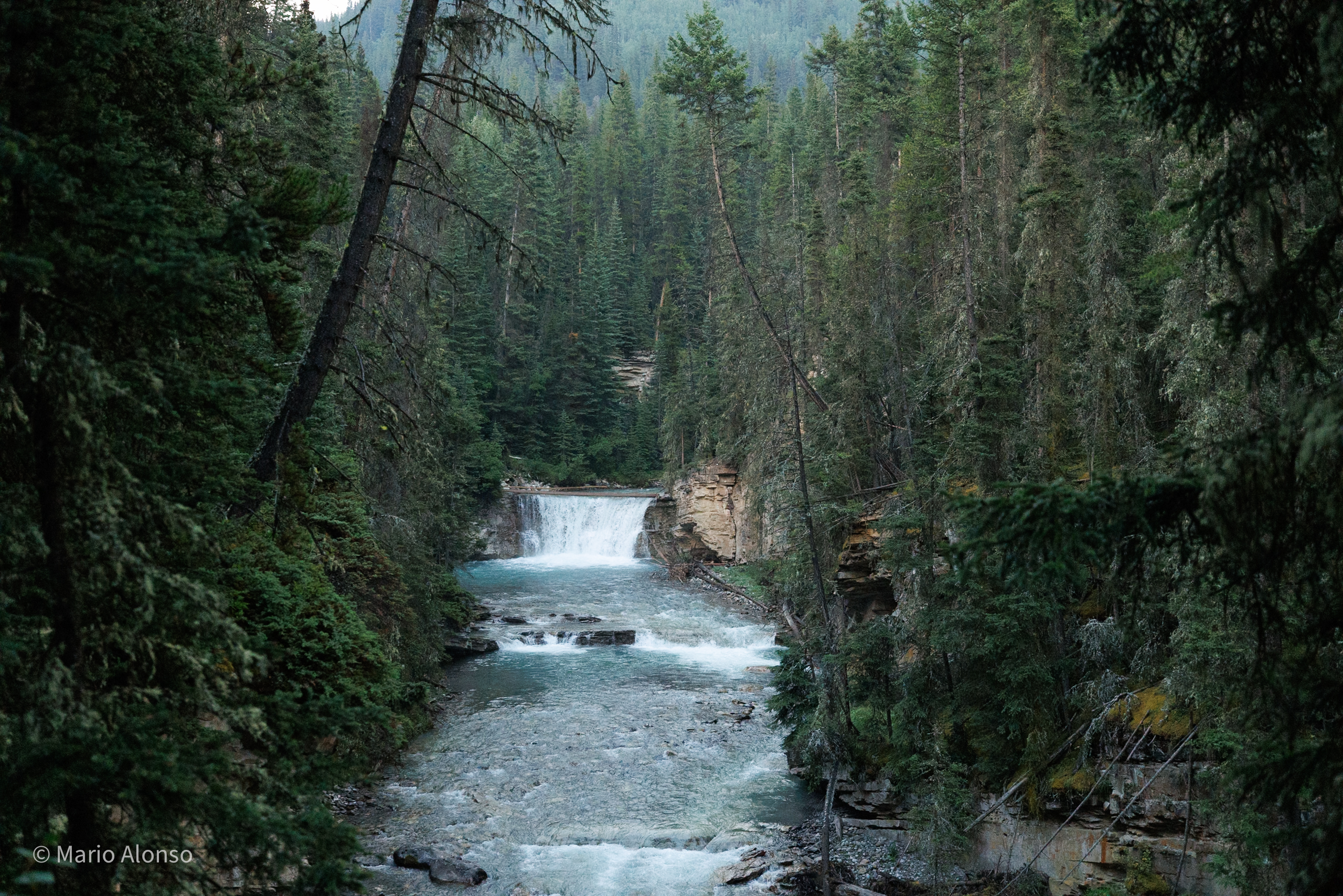
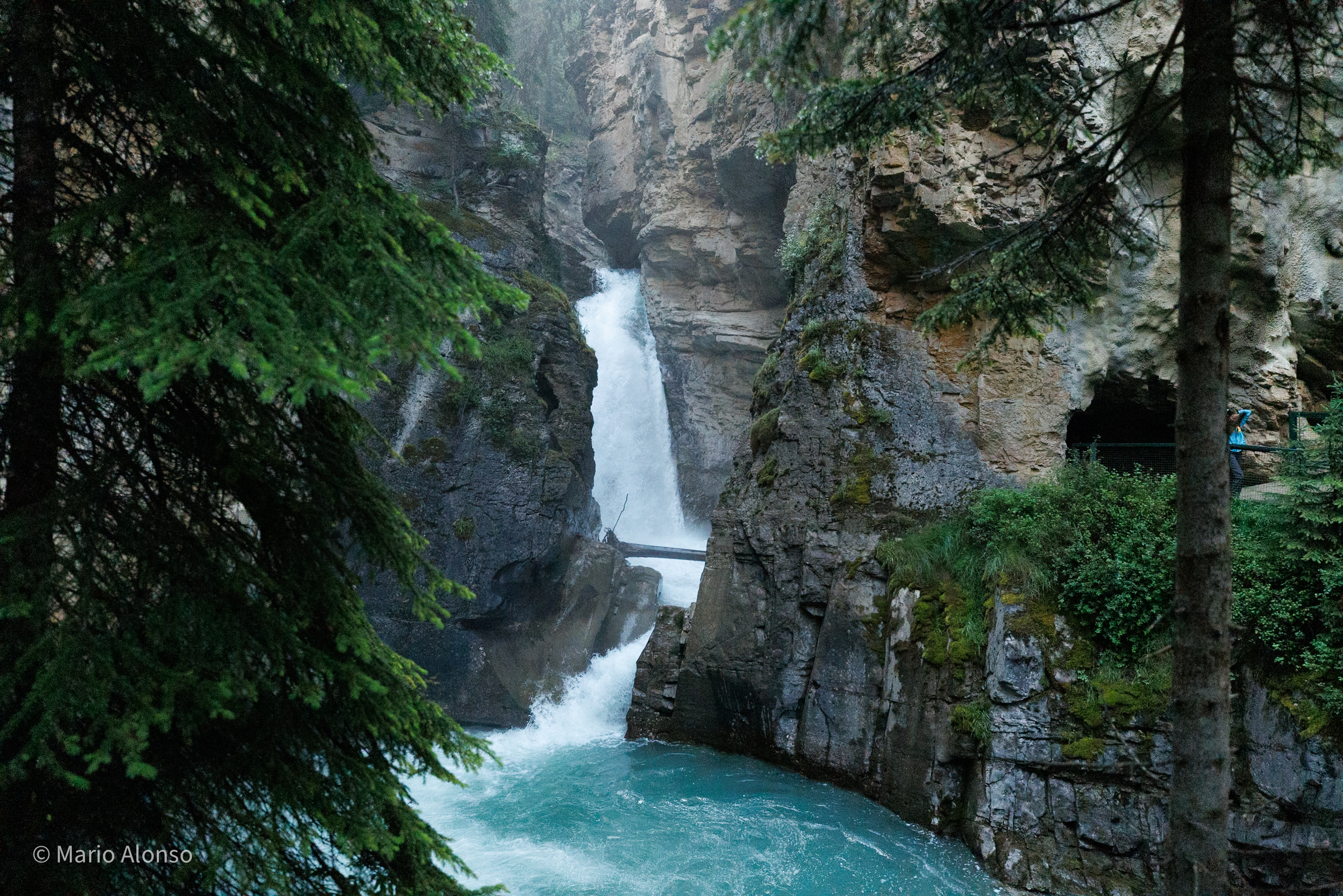
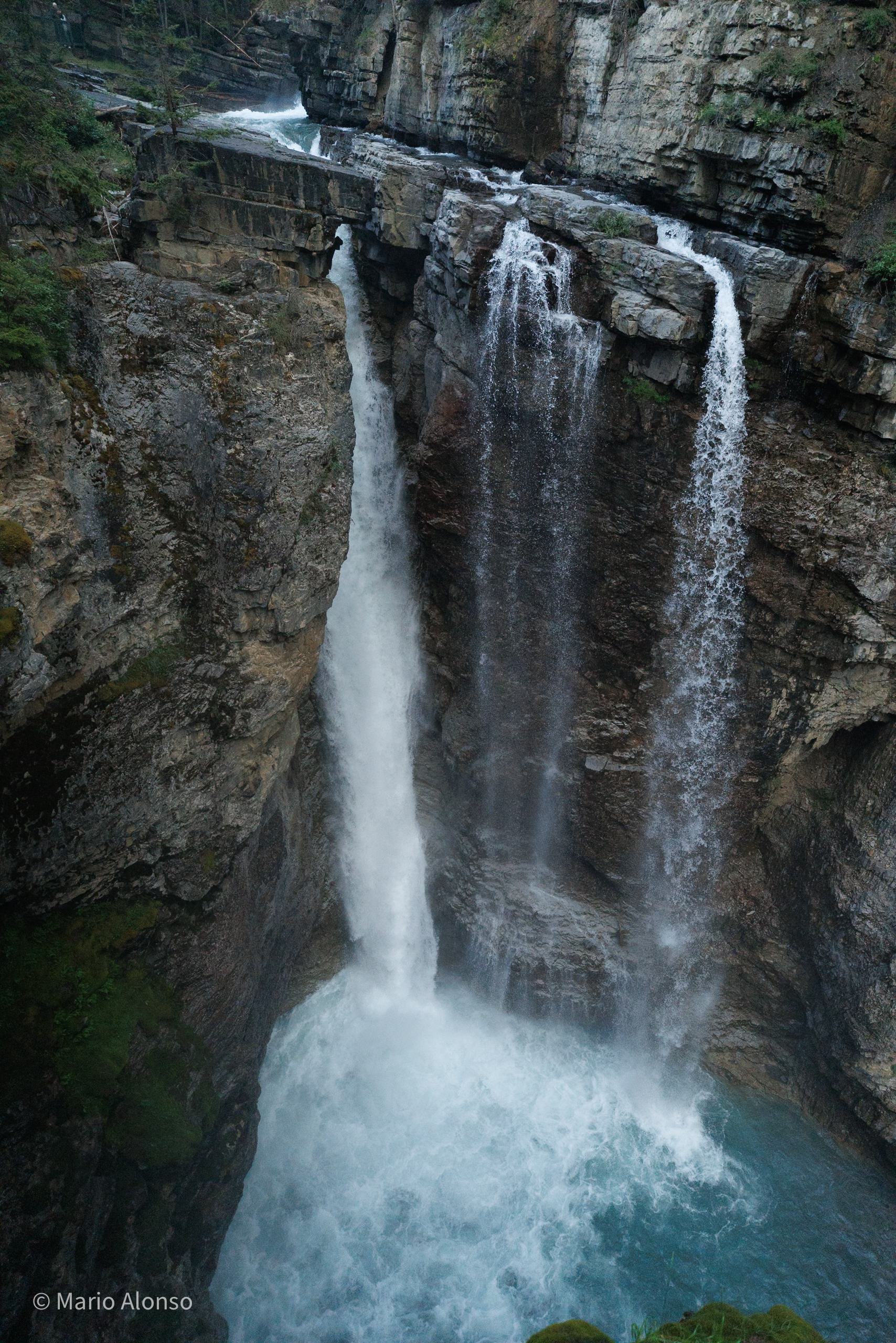
The trail is paved the whole way to the falls, about a mile and a half, and it is gorgeous. Catwalks bolted to the canyon wall carry you over the creek where there is no bank to walk on, and the falls at the end are genuinely worth the trip.
We kept going. Above the canyon the trail climbs out into an open valley and reaches the Ink Pots, a set of spring-fed pools that come out of the ground in different colors. That made the full round trip about 7.7 miles, and it was the right call twice over: the upper section is quiet, and it is a completely different landscape from the canyon below.
The return leg is where the morning taught its lesson. There were queues at the falls and an unbroken column of people coming up. It stopped being enjoyable. By the time we got down and had a coffee at the shop at the trailhead, the parking lots were full and staff were turning cars away.
If you take one thing from this entry: at Johnston Canyon, 6:30 a.m. is not early. It is the last reasonable hour.
An afternoon that got better as it went
We went back to camp, spent time with Frida, and had a picnic lunch on a bench facing the Bow River.
Downtown Banff in the afternoon for some shopping, including a stop at the Parks Canada office to buy paper maps of Canada. By that point it was obvious we were not going to be able to rely on GPS. Cell coverage outside the towns is poor and gets worse the further north you go. From here on we navigate old school, the way I did when I was young.
Then Vermilion Lakes for late-afternoon birding, and the day quietly turned. The smoke was thinning. Over the course of an hour the Rockies came back, ridge by ridge, until Rundle was sharp again across the water.
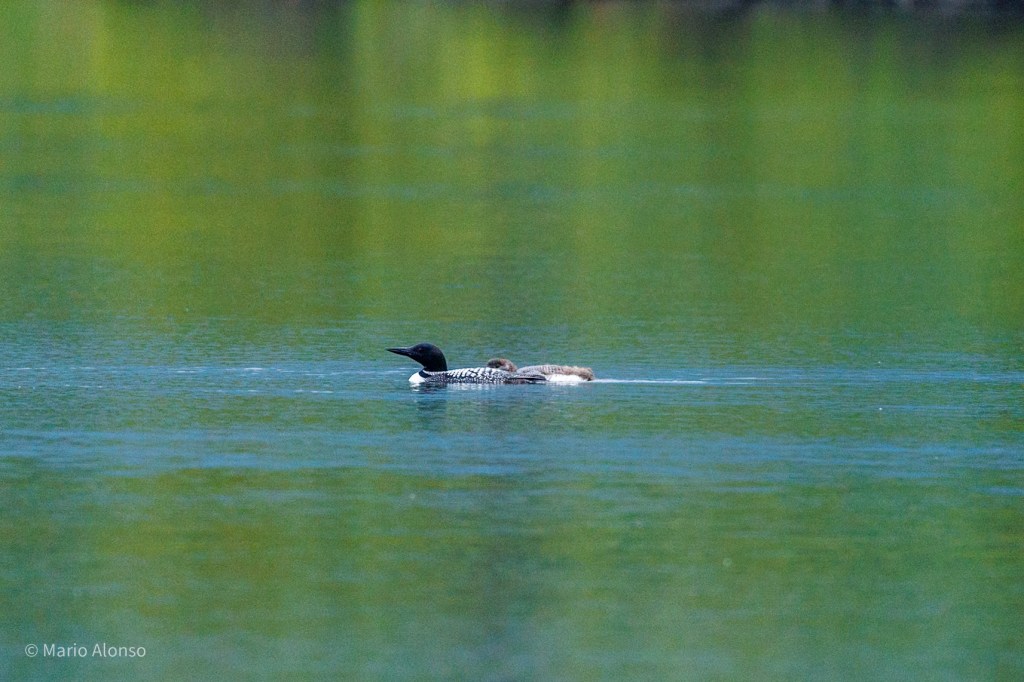
The lakes are a sedge and willow wetland strung along the Bow, and they earn their reputation. We had Common Loon (Gavia immer), Common Merganser (Mergus merganser), geese, a Bald Eagle (Haliaeetus leucocephalus), a Red-necked Grebe (Podiceps grisegena), and a family of Wood Duck (Aix sponsa). The last of those is the one worth noting: Wood Duck is at the edge of its range here, listed by Parks Canada among the species you might be lucky enough to find at Vermilion Lakes, and a family group is a better record than a single bird.
We finished the evening back at camp, starting to pack for the drive north.
The last morning
We stepped out of the camper on the morning we left and there was a herd of Elk (Cervus canadensis) walking past, a few meters away.
That is the counterweight to everything said above about Banff feeling managed. The campground may be a gravel terrace with a transit stop, and the trails may be paved, but the animals have not read any of that. Nature is not somewhere you drive to here. It walks through the site while you are loading the camper.
Worth noting how little of that was up to us. Parks Canada asks visitors to stay at least 30 metres from elk, about three bus lengths, and early August is the start of the rut. Good advice, and it assumes you are the one closing the distance. We were not. They came through the campground on their own schedule, which is the version of this that no guidance really covers. You stand still, you keep quiet, you do not put yourself between animals, and you enjoy it from exactly where you happen to be.
Frida slept through the whole thing.
The campground
Tunnel Mountain Trailer Court, site 827, full hookup, two nights, booked through the Parks Canada reservation system.
After Fish Creek, this was the first time on the trip that shore power and a National Park came in the same package. Trailer Court has 322 sites, all with three-way hookups, and it is restricted to trailers and larger units, which is why it can offer what the two neighboring Tunnel Mountain campgrounds cannot: Village I has no hookups and Village II is electric only.
Practical things worth knowing. There are no campfires permitted anywhere in the Trailer Court. There are showers, flush toilets, drinking water and a dump station. The campground is about 2.5 km from town with a Roam transit stop on site, so you can leave the truck parked and take the bus in, which in a town with Banff’s parking problem is not a small thing. The 2026 season runs May 9 to October 6.
One thing I would check before booking rather than after: the 800-series sites sit closer to the highway, and road noise is the recurring complaint about that section. Reviewers consistently point people toward the 400s through 600s instead.
Traveling with Frida here
The rules change the moment you cross the line, and Banff is where that becomes real.
- Shade: Moderate. Tunnel Mountain is open pine and gravel, not the closed canopy of Fish Creek.
- Cooling: Full three-way hookups. No battery arithmetic for the first time in a National Park on this trip, plus the temperatures were cooler here.
- Where she could come: Substantially more than in the US parks. Parks Canada permits leashed dogs on most trails, including Johnston Canyon, along with the campground, the townsite, and the Bow River paths. She did not come to the canyon, but that was our choice rather than a rule: the morning was cool and she was happy to sleep in the camper while we walked. Worth knowing that the option existed, which it did not anywhere in Glacier.
- Where she could not: Buildings, and anywhere posted for wildlife closures. Leash at all times.
- Dog care: None arranged. Not needed here.
- The midday block: Barely a factor. The Bow Valley in early August is mild, and the smoke suppressed the heat further.
Verdict
The park. Beautiful, immaculately run, and less wild than what follows it. If you want mountains without friction, Banff is the best there is. If you want to feel remote, keep driving north.
Two nights worked, but only because we abandoned the plan on the first evening instead of the second morning. Come earlier in the morning than you think you need to. That is the whole practical lesson of this park in high season, and it is a direct consequence of how many people the park’s excellent infrastructure is capable of delivering to a trailhead.
The campground. Tunnel Mountain Trailer Court is a practical choice rather than a beautiful one, and in Banff that is the right trade.
It is the only one of the three Tunnel Mountain campgrounds with full three-way hookups, it is 2.5 km from town with a Roam stop on site so you can leave the truck parked, and it takes trailers that most in-park campgrounds cannot. What you give up is atmosphere: it is a gravel terrace of 322 sites with no campfires permitted anywhere in it. Book a site in the 400s through 600s rather than the 800s, and reserve as early as the Parks Canada system allows, because Banff sites go the morning they open.
Two nights worked, but only because we abandoned the plan on the first evening instead of the second morning.
See more
- Photos from Banff National Park in the gallery
- Traveling with a senior bulldog: the ground rules, the reasoning behind every camping decision in this series
 Looking 4 Nature
Leave a comment